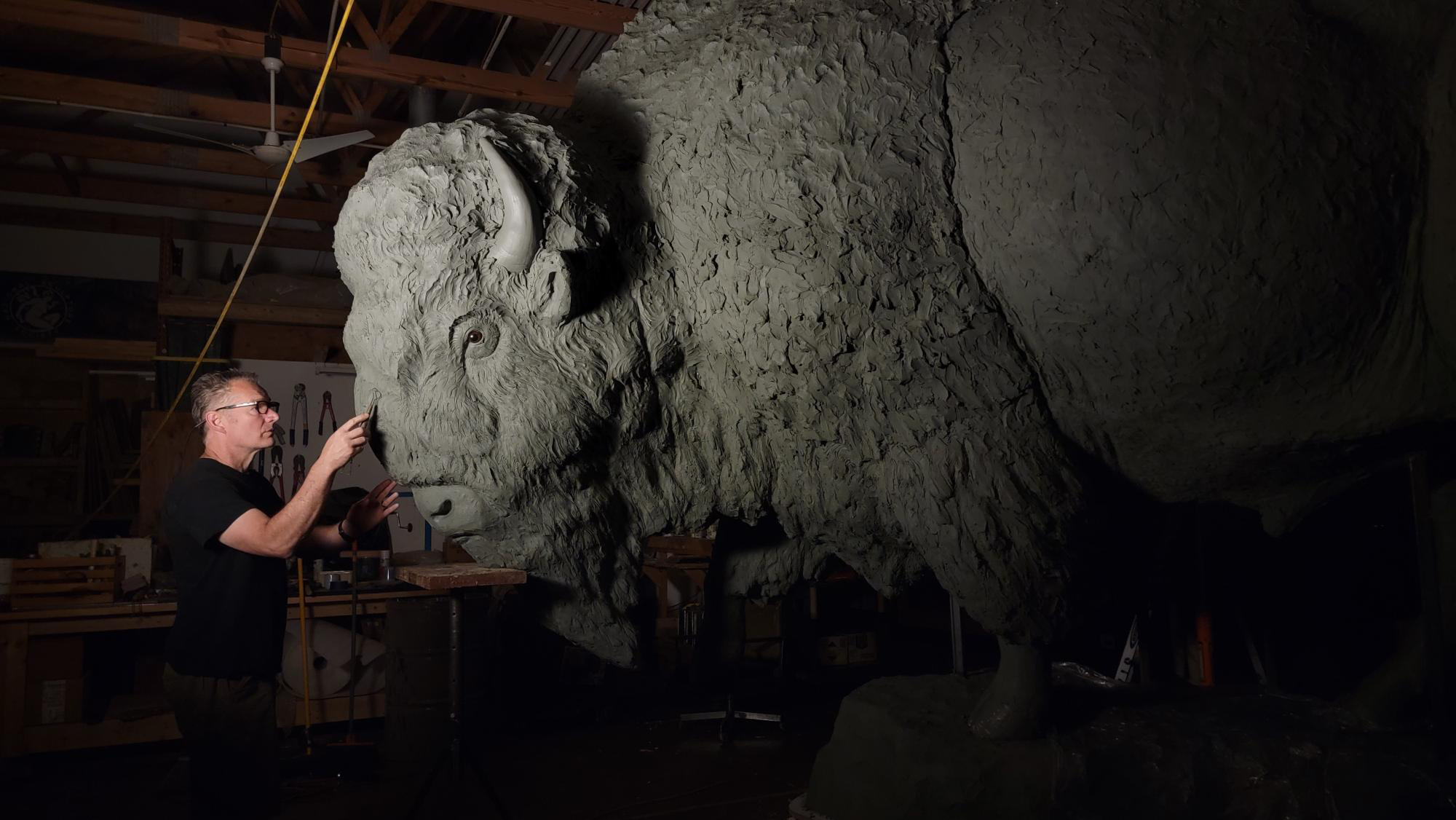
On March 14, three larger-than-life bronze bison statues created by Nebraska artist Gary Staab will pause their weeklong, cross-country journey from Colorado to the Smithsonian Institution with a visit to the University of Nebraska State Museum-Morrill Hall.
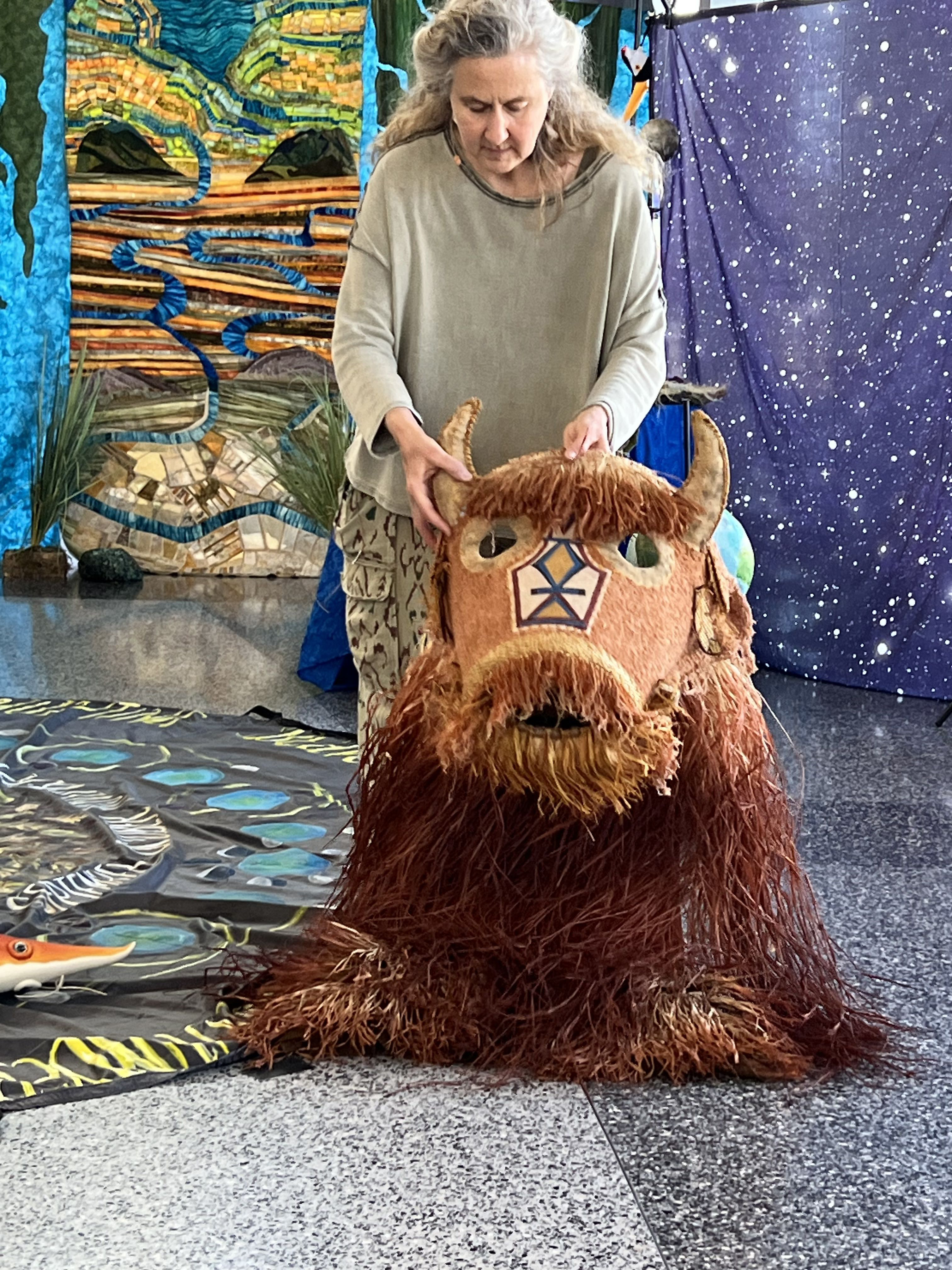
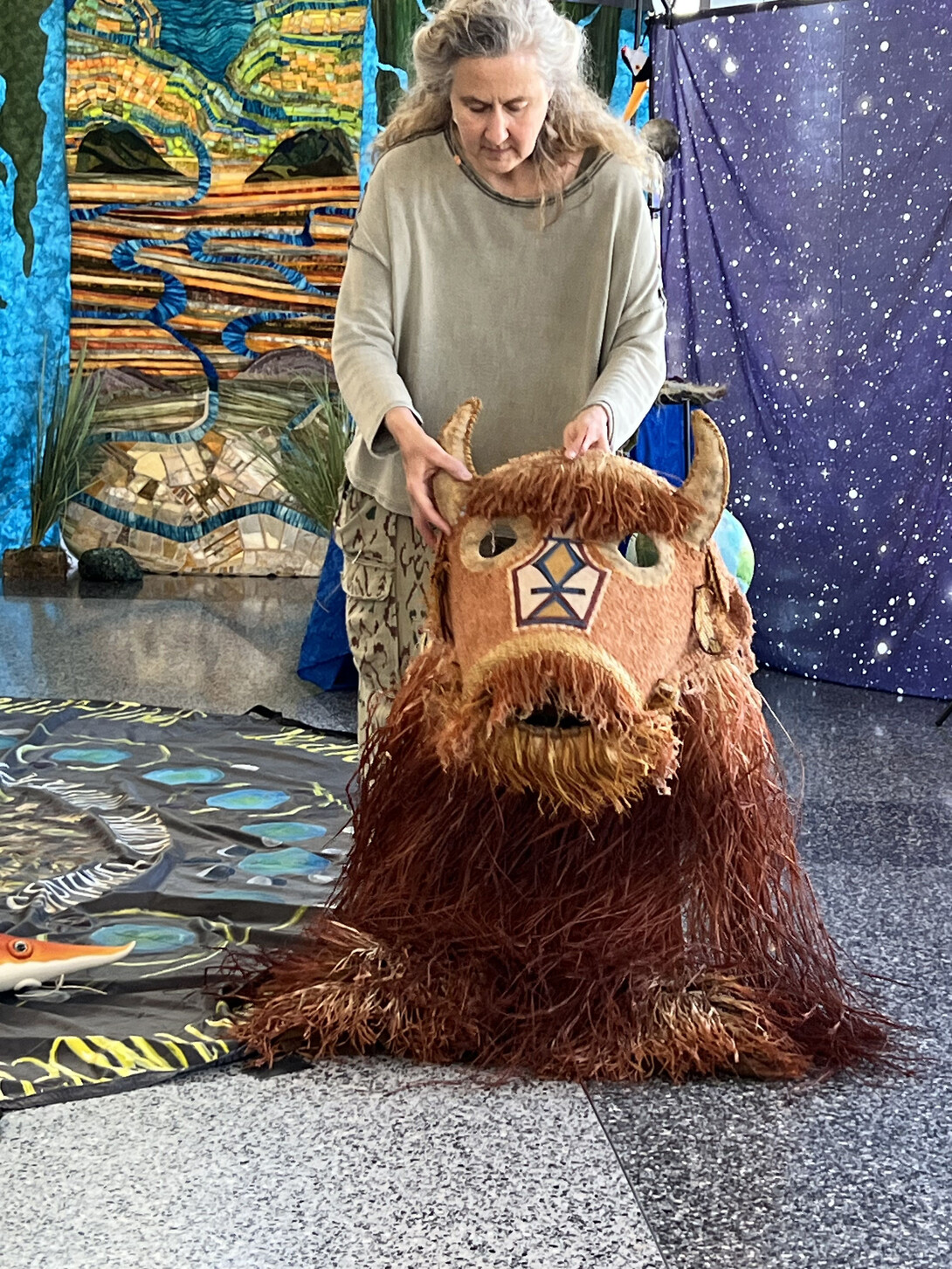
From 9 a.m. to 3 p.m., the museum will host “The Bison are Coming.” Visitors will be able to see the statues and learn about their creation; enjoy a variety of activities focused on bison biology, led by NU State Museum and Smithsonian staff; and explore Morrill Hall’s temporary “Bison” exhibition. Heather Henson, daughter of famed puppeteer Jim Henson, will have a booth and perform a puppet show at 1 p.m. in Elephant Hall. Renee Sans Souci, educator and cultural consultant with the Omaha Tribe, will lead an activity called “We Are the Buffalo and the Buffalo Are Us.” All activities are included with museum admission.
The bison statues were commissioned by the Smithsonian’s National Museum of Natural History to celebrate the national mammal and commemorate the United States’ 250th anniversary. Staab, a Grand Island native, was selected to create the sculptures. Many Nebraskans will recognize the renowned natural history artist from his work on the “Battling Rhinos” and “Ancient Tortoise” sculptures at Ashfall Fossil Beds near Royal.
Staab and Kirk Johnson, director of the National Museum of Natural History, will be in attendance at the March 14 event.
“As a Smithsonian affiliate, we are honored to contribute to this celebration of bison,” said Susan Weller, director of the NU State Museum. “We are thrilled that Nebraska native Gary Staab was selected to create these pieces, and we can’t wait to share activities focusing on our national mammal with our museum visitors and area families.”
“Bison” tells the story of this quintessentially North American animal and the Native American tribes who depended on it. The exhibition illuminates the past, present and vibrant future of bison on the continent and invites visitors of all ages to explore the significance of bison in the cultures of Plains Indian Peoples — particularly as a resource for food, clothing, shelter and tools. The exhibition is presented by Kauffman Museum of North Newton, Kansas, on behalf of the National Buffalo Foundation.
In the late 1880s, when the species was on the edge of extinction, several bison were brought to live behind the Smithsonian Institution Building as a precursor to the Smithsonian Zoo. It was an early effort to raise public awareness of the decline in populations and helped support conservation efforts. Four of the bison in the small herd in 1887 hailed from Nebraska. Smithsonian taxidermist William Temple Hornaday crafted life-like bison mounts that served as the inspiration for Staab when creating the three bronze statues.
Staab’s statues will have visited the Denver Museum of Nature and Science before arriving at Morrill Hall. After departing Lincoln, the bison will stop at the University of Iowa Museum of Natural History (Iowa City) on March 15 and the Field Museum (Chicago) on March 16-17. They will then travel to Washington, D.C., where they will set the stage for “Bison: Standing Strong,” opening May 7 at the National Museum of Natural History.
Learn more about the Smithsonian exhibition.
Learn more about the University of Nebraska State Museum-Morrill Hall.
Share
News Release Contact(s)
Tags
High Resolution Photos