For decades, leadership development programs have traditionally focused on strengthening individual participants. A University of Nebraska–Lincoln team is testing a different approach — one designed to strengthen leadership systems community-wide.
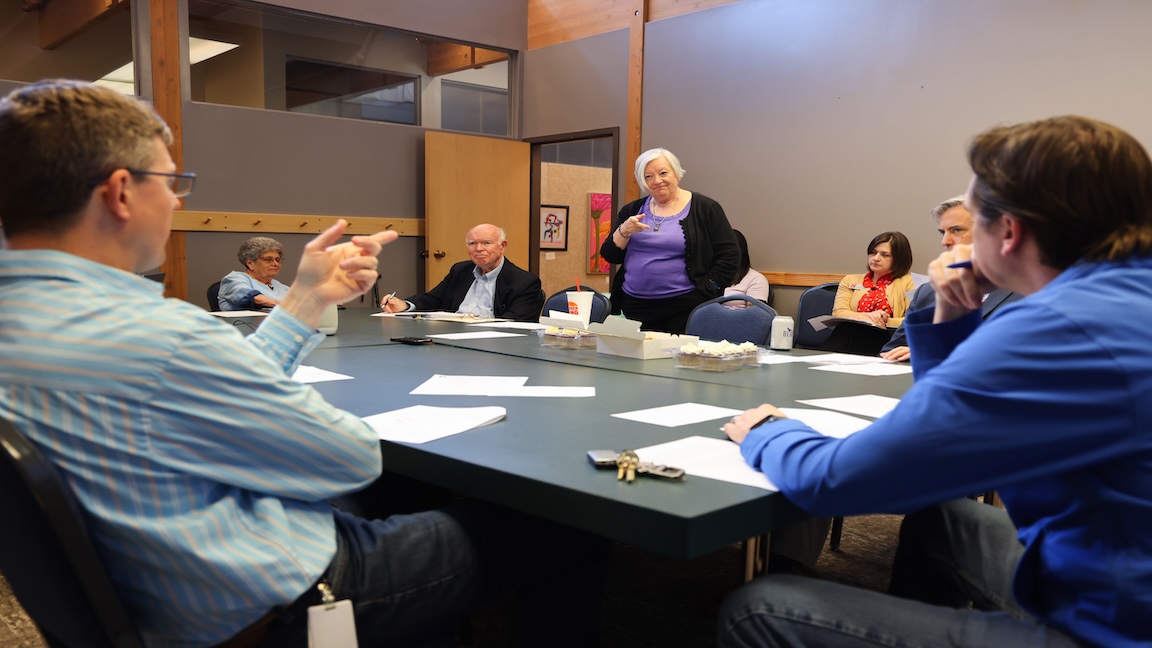
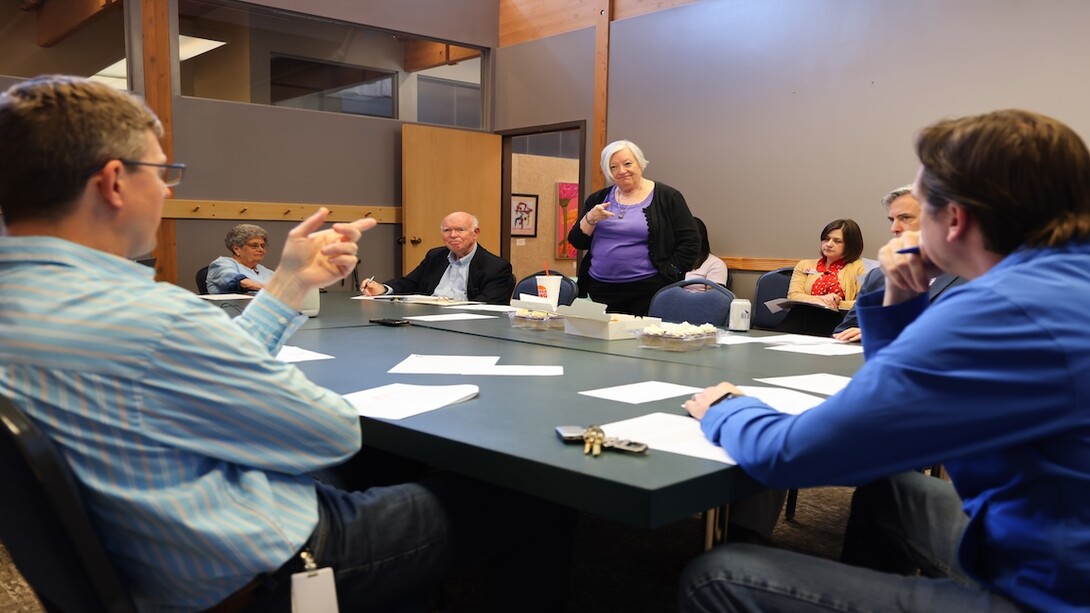
The model is being put into practice in Seward, where researchers and Nebraska Extension educators are working alongside local leaders as they pursue a hotel development project and examine ways to broaden civic engagement, shared ownership and community leadership.
Since January, Lindsay Hastings, professor of leadership in the Department of Agricultural Leadership, Education and Communication; Mary Emery, executive director of Rural Prosperity Nebraska; Jordan Rasmussen, Rural Prosperity Nebraska extension educator and program leader; and Justine Yeo, postdoctoral research assistant, have partnered with Seward leaders to apply leadership research within an active community development effort.
“Research on leadership programs does show gains on the individual level, but we really weren’t seeing capacity at the community level being impacted,” Hastings said. “Rather than us coming in to put on a program, we have been embedding ourselves into existing community development work to try to enhance their work while they’re doing it.”
The approach reflects a broader shift in how researchers are thinking about rural leadership — not just as a set of individual skills, but as a system shaped by relationships, participation and shared responsibility.
One challenge many rural communities face is what Hastings calls the “Same 10 People” phenomenon — a small group of residents who repeatedly step forward to lead projects, serve on committees and address community needs.
As Hastings and her colleagues joined discussions with Seward’s steering committee, they introduced research on dimensions of effective community leadership systems, including adaptability, growth mindsets and civic engagement. Those conversations have helped shape not only the hotel initiative, but also broader discussions about how the community develops and supports future leaders.
“With more and more time taken up by jobs, family activities, all the other volunteer organizations and various community needs, it has become harder and harder to find leaders,” said Greg Butcher, Seward’s city administrator and a member of the steering committee. “By working through the university team, I was able to realize how important a sincere ask for help and leadership is.”
The civic engagement principle is based on research Hastings conducted with other rural Nebraska communities. The basic idea is that communities thrive when they intentionally reduce the intimidation around civic involvement — known as the “come with me” concept. Hastings found that, across Nebraska, the communities that have successfully increased leadership capacities among their residents, instead of solely among a few select individuals, include residents who intentionally invite others to join community conversations with them.
It’s not about “you should go” to this meeting, but rather “you should come with me,” Hastings said.
“The Seward group has brought together those from banking, accounting, developers, hotel managers," she said. "But it also has brought together two people who aren’t involved in those fields at all but have been longstanding volunteers in the community.”
Butcher said it was important to ensure there were leaders from numerous disciplines working on the project.
"Our problem wasn’t going to be solved by having five people from the same area in the same room," Butcher said. "Having numerous minds looking at a problem from their varied perspectives helped shape the problem, define the goal and provide numerous possible ways to solve.”
At the heart of why intentional invitation succeeds is that communities with successful leadership systems create shared ownership among residents. Every town has naysayers, Hastings said, and those people are important to iron out the wrinkles in project ideas. However, when a large portion of residents are invested in a project or initiative, communities experience what Hastings called an “abundance mindset,” or collective ownership, and resilience to negativity.
At the front end, intentional invitation requires a lot of dedication as the “Same 10 People” must connect with their neighbors and make those individual invitations. In the end, however, shared leadership spreads workload, builds buy-in and prevents burnout.
“What feels like more work is actually less work in the long run,” Hastings said.
The Rural Prosperity Nebraska team will join the Seward group again, next time discussing the qualities of effective local leaders. They have also been meeting with the Loup County Public Schools Foundation, in Taylor, Nebraska, facilitating conversations as the county seeks to deepen its capacity for intentional leadership succession and workforce efforts.
Hastings' team will also be writing a special issue for the Community Development Journal, and they have received approval to publish a textbook on the process of strengthening leadership capacities at the community level.
“Thriving communities aren’t built by a few heroic individuals, but by intentional invitation and shared ownership among all neighbors,” Hastings said. “That said, every conversation we’ve had in each community has given me more and more hope about the future of rural Nebraska.”
Share
News Release Contact(s)
Tags
High Resolution Photos