University of Nebraska–Lincoln police staff and students have produced a new tool to empower students to take their safety into their own hands.
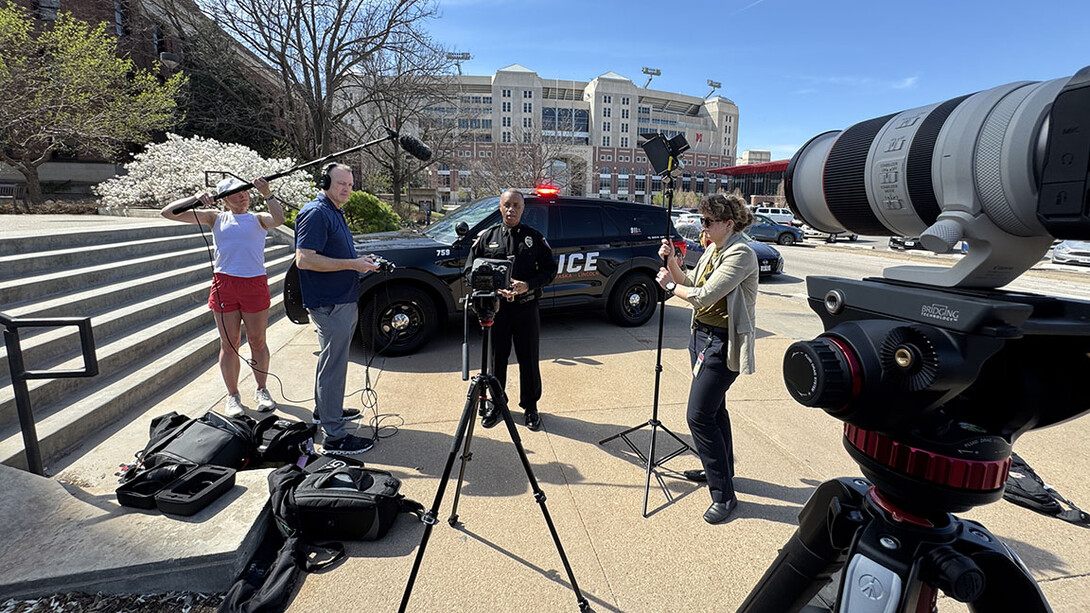
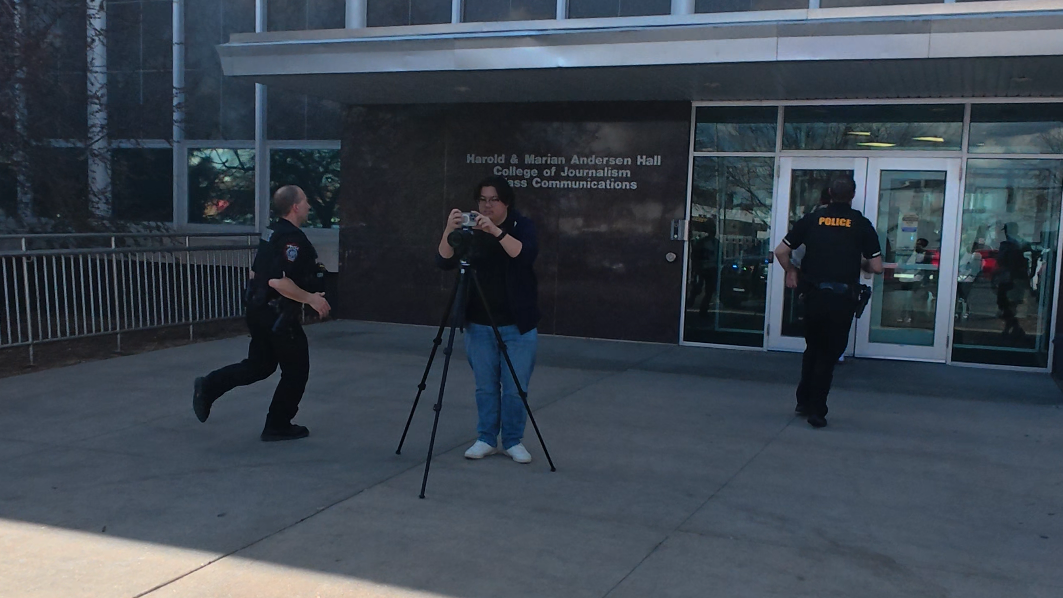
A new video created by Production House, part of the College of Journalism and Mass Communications’ Experience Lab, for the University of Nebraska–Lincoln Police Department provides public safety tips for students, by students. Justin Diep, senior journalism and advertising and public relations major and student lead of the project, said it would be an effective tool for any new member of the campus community, while giving him and other students an introduction to the professional sphere.
“This really emphasizes the college’s ‘Do from Day One’ motto, where in the classroom we’re doing the things we’re going to be doing in the real world,” Diep said. “It’s a project that will have a lot of impact and that’s really cool to have that experience.”
“Run, Hide, Fight” is a strategy for how to respond in an active shooter situation. University police connected with Production House to create new visuals explaining the principles of the strategy for educational outreach. The Association of Students of the University of Nebraska funded the project.
Mason Ain, a sophomore political science major and student worker with the university police department, said the video can be a more accessible way to communicate the information than asking students to read through policies.
“If there was a mainstream, widespread video for the student body, for faculty and staff and parents to access, I think that would create more awareness,” Ain said. “Although these instances are rare that something like this could happen, it’s a great tool to have, not even on the college campus but in daily life.”
The full video includes an introduction to University Police and other campus safety resources and like UNL Alert as well as a detailed description of the Run, Hide, Fight framework. In an active threat situation, people should run if they can, hide if they cannot escape and fight only as a last resort.
The video will be used at campus events like New Student Enrollment and other outreach activities and on social media. Ain said offering instruction can help students now and in the future.
“If we can prevent something from happening in the first place, that’s a goal,” Ain said. “Maybe an emergency happens down the road when we have graduated and we’re out in our workplaces, and if these tools can be remembered, it will be worth it.”
Emma Gutmann, senior advertising and public relations major and student on the Production House team, said the opportunity to work with a real client allowed her to dip her toe into the professional world with support. The team did everything from filming to acting to editing, she said, and she learned about how to collaborate professionally in that kind of environment.
“This was my first time ever doing something like this,” Gutmann. “It was scary at first, but it’s awesome that we’re given the opportunity to do this before we are out in the real world and working for a company and they do a good job preparing us for that. This really pushes you to try harder and test your skills.”
Kristian Anderson, assistant professor of practice in broadcasting and director of Production House, said providing these avenues to work on these projects is key to the students’ hands-on education. It gives them a chance to create with real stakes and tangible goals. The group also has worked with Cornhusker State Games several times creating videos for their awards banquet, for example.
“We want to get our students another venue to learn about the industry and get their skills and learn how to produce for the different mediums that are out there,” Anderson said. “The students love having real clients to do work with and that’s what we try and aim for. Having deadlines and real situations helps prepare them for what they might be seeing once they graduate.”
Having such a large undertaking with multiple shoots, camera and audio skills shows the students a new level of what they’re capable of. They can even fail with a safety net and learn from their mistakes, reaching a point where the finished product will still satisfy the client.
“They feel it has meaning,” Anderson said. “They can really feel proud they produced something someone is using and it’s their work and they did a great job and produced something the client loved.”
Students mentored each other through the process as well, Anderson said. More experienced students, such as Diep, were able to offer instruction to the younger students on how to use equipment, scheduling shoots and other logistics.
“I love that we have those mentors that can help guide,” Anderson said. “It’s always scary to try something new, and we have these early portfolio pieces that we say, ‘Take this camera and see what you can do.’”
Ain said collaborating with other students on the project improved it because everyone was able to bring their unique skill set.
“It was great to work with other students and teach them about what I’m passionate about, which is public safety policy and stuff like that, and give my insights, but also hear their concerns about filming locations or angles and allowing their passions to really be used in a professional way,” Ain said.
For Abby Schletzbaum, emergency management director for University Police, including student voices brought together multiple major campus stakeholders — students and police staff — to understand each other. Student input also allowed the video to more directly address concerns they might have specifically and empower them on campus.
“College is a very exciting time but it can be difficult as students learn how to live independently and take responsibility for their own safety in ways they haven’t before, Schletzbaum said. “So I wanted to provide a resource can learn not just about active threat but also UNLPD and general safety and how they can better navigate the college campus environment.”
Schletzbaum said she is excited to have a new tool for delivering this information to fellow students and hopes it will be more relatable and interesting to the people it is trying to reach.
“Having the information be from and by students, consulted by industry standards, allows the students to implement this in their daily lives and feel excited about the content and more engaged with it than having someone just try and lecture them in a classroom,” Schletzbaum said.