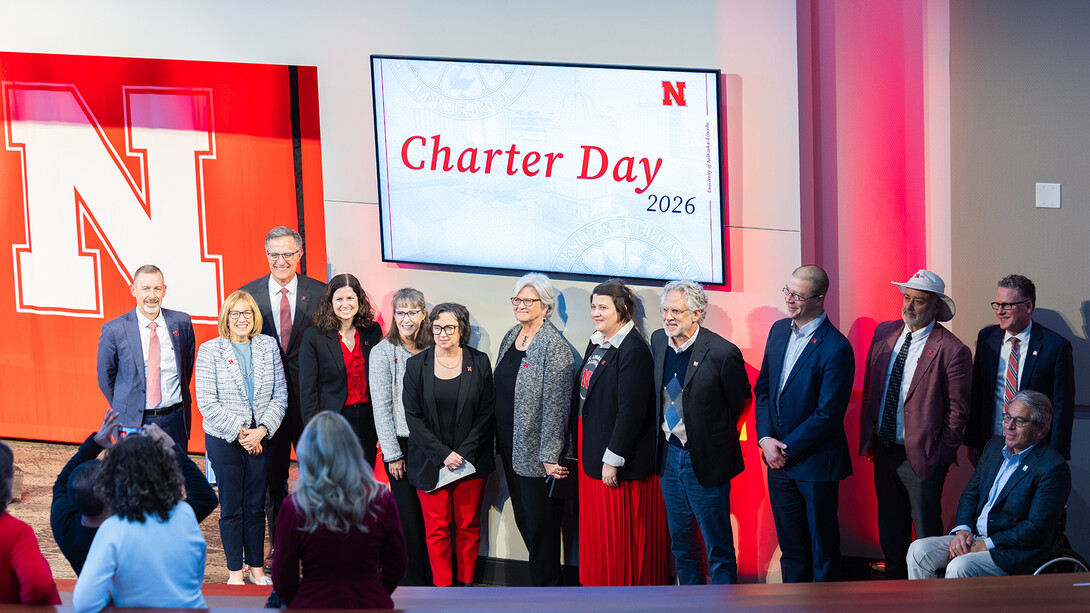
During the Feb. 13 Charter Day celebration, leaders from across the University of Nebraska–Lincoln shared how their colleges and units are advancing the institution’s land-grant mission — expanding student success initiatives, launching new academic programs and driving research, community partnerships and workforce development across Nebraska.
Echoing the chancellor’s focus on purpose, speakers described how their work connects classroom learning to community impact, innovation and opportunity across the state. Below is a recap of each presentation, in the order presented during the Charter Day event.
Journalism and Mass Communications
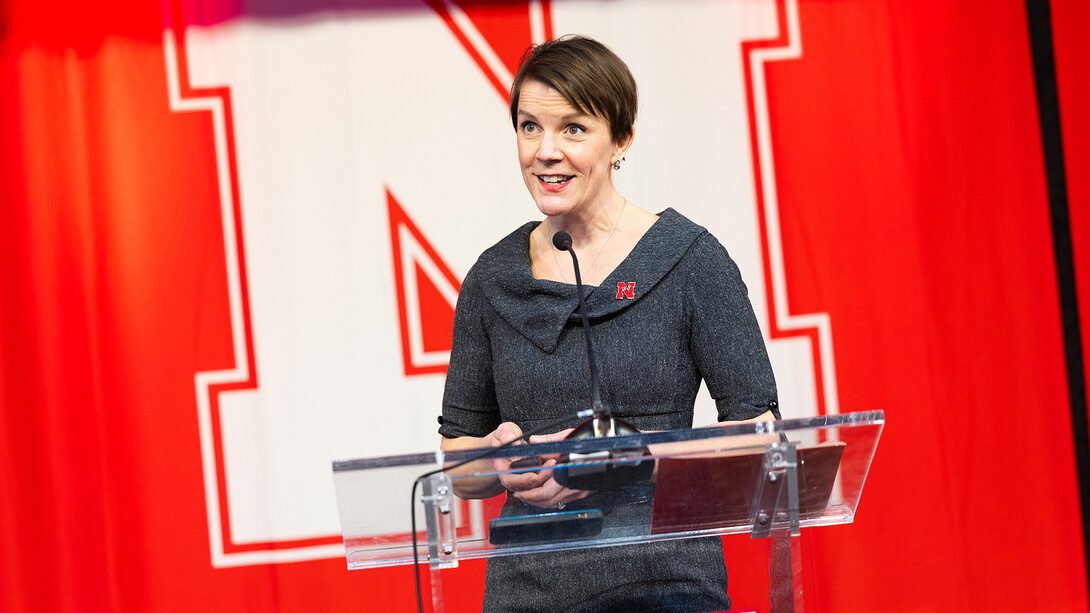
Valerie Jones, interim associate dean for research and faculty affairs and Fred A. and Gladys Seaton Professor of advertising and public relations in the College of Journalism and Mass Communications, described her college’s essential role in an ever-changing world.
She highlighted the college’s Experience Lab; its extensive work with industry; new academic programs; the Rural Journalism Internship Program; High School Media Days; and faculty research on topics such as artificial intelligence, media law, health and crisis communication, rural journalism, sports media and emerging technology.
“At root, we exist to ensure that ideas move from classroom to community, from research to public understanding,” Jones said. “Communication isn't just a profession, it's a public good, the connective tissue of a modern land-grant university, and we advance it across Nebraska by doing from day one.”
Architecture
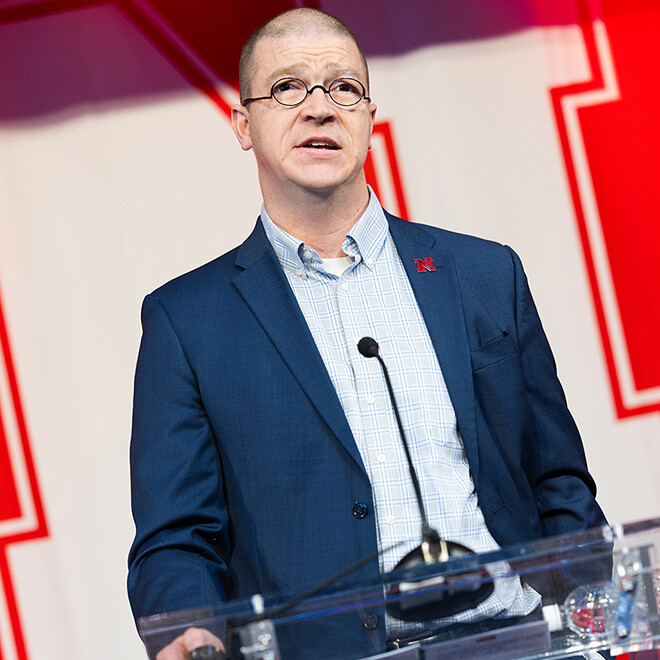
Kevin G. Van Den Wymelenberg, dean of the College of Architecture, said his college is “focused on building more beautiful and resilient communities” by educating change-makers and problem solvers who make an impact in Nebraska and beyond.
He pointed to the ASSIST studio’s recent work with the village of Axtell to envision a stronger community and the FACT studio’s OurStory project, which is reimagining small, sustainable homes to help Omaha residents age in place.
"Faculty and students are routinely and continually pushing the edges and exploring new ways to design, build and shape the world through their research and creative practice," he said.
Van Den Wymelenberg also spoke about AI-focused projects by Brian Kelly, Salvador Lindquist, Yunwoo Nam and David Newton; a carbon-sequestering micro-dwelling built from invasive redcedars by Jason Griffiths and his students; and Nate Bicak and Kendra Ordia’s exploration of the use of native species and abundant plant materials to create new building materials.
Arts and Sciences
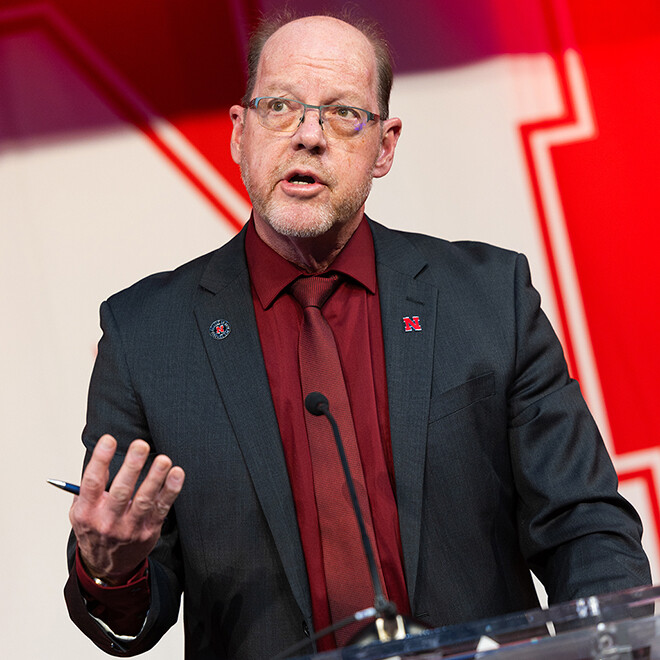
Patrick Dussault, interim dean of the College of Arts and Sciences, emphasized that his college prepares students, "not only for evolving careers, but for thoughtful citizenship, lifelong learning and leadership in a complex world.”
Student recruitment and success remain central priorities for the college, he said, and have resulted in increases in first-time freshmen and transfer students and a 92% retention rate from last year.
Dussault also touched on the college’s new multidisciplinary studies major; experiential learning opportunities; renowned faculty; innovative research projects, such as Stephen Morin’s pursuit of synthetic “muscle” and Katrina Jagodinsky’s “Petitioning for Freedom” work; the Bureau of Sociological Research, which for decades has provided data and insights that inform policy and advance public understanding; and the Center on Children, Families and the Law, whose work impacts the well-being of many Nebraskans.
Fine and Performing Arts
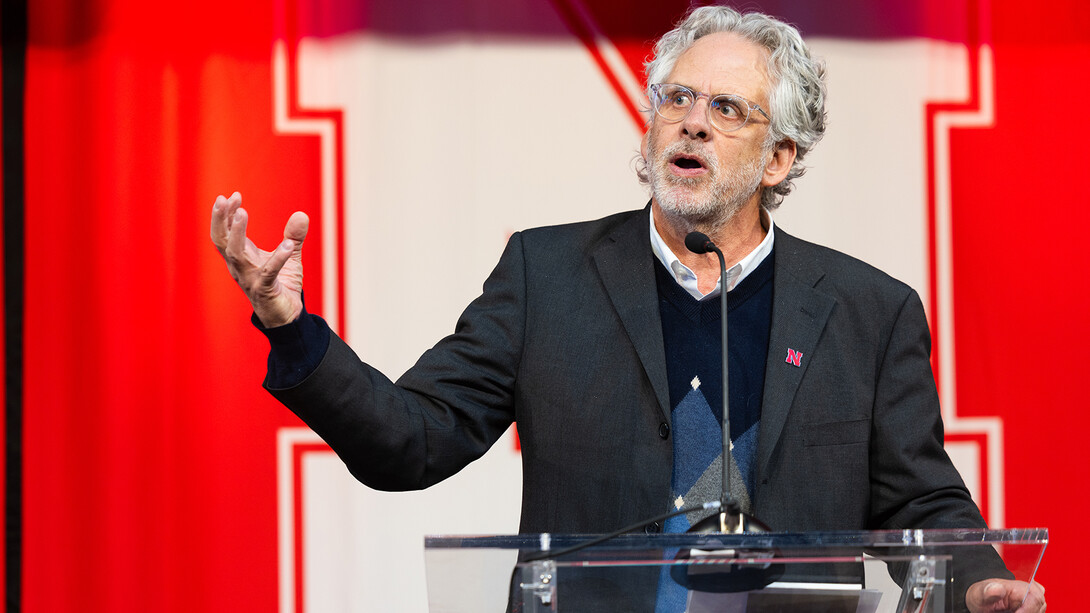
Andy Belser, dean of the Hixson-Lied College of Fine and Performing Arts, said his college aims to cultivate imagination to benefit the Lincoln community and help students adapt to an “entirely new world.”
He pointed out that the college’s students will work in all kinds of industries — developing theme parks, making movies to stream on smartphones and producing Super Bowl halftime shows.
Belser talked about intended new offerings — including a Bachelor of Fine Arts in Entertainment, Design and Production; Bachelor of Arts in Sound Technology; Bachelor of Fine Arts in Musical Theater; and emerging media arts graduate program and minor.
He said the college is growing imagination in three ways — by spreading emerging media arts throughout the college and university and starting new programs; by creating global travel experiences for all arts students; and by promoting an interdisciplinary curriculum that encourages students to double major.
Engineering
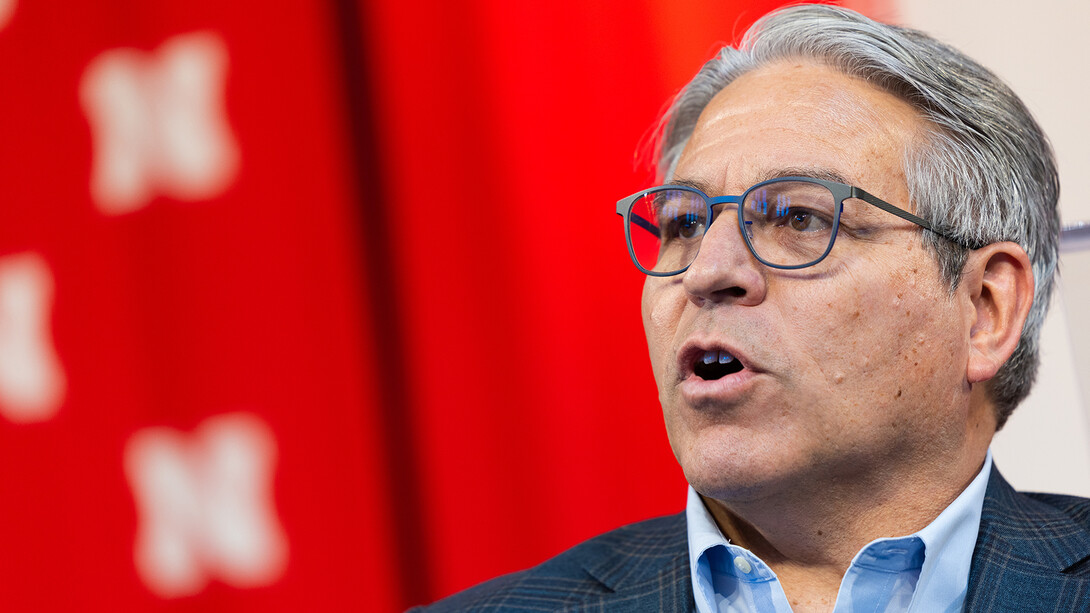
Lance C. Pérez, Fred Hunzeker Dean of Engineering, said his college’s “why” is to train the next generation of the state’s engineering, construction and computing workforce while conducting research that solves problems of global importance.
He discussed the 2024 completion of Kiewit Hall, a $115 million, privately funded "transformative investment" that houses the Design Hub makerspace; the recent construction of solar-powered sheds by Emmeline Watson’s Vertical Construction classes; the annual regional robotics competition; the yearly Senior Design Showcase; record undergraduate enrollment and research expenditures; and the Complete Engineer program, in which all students develop six essential, non-technical core competencies.
Pérez closed his presentation by highlighting the new PRAIRIE Initiative, a partnership with the College of Business that aims to build on Nebraska Engineering’s 30-plus years of AI work.
"This initiative seeks to make sure that everybody who comes to UNL — faculty, staff and students — will ... learn about AI and about how to use it in a socially and ethically responsible way," he said.
Institute of Agriculture and Natural Resources
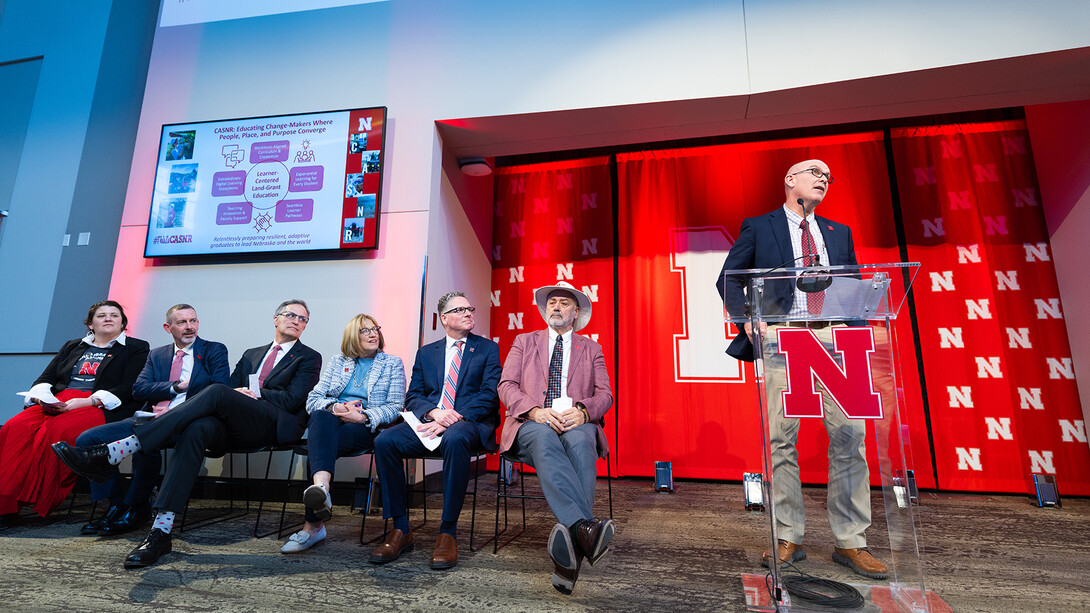
Thomas Burkey, interim dean of the College of Agricultural Sciences and Natural Resources, said the college is preparing learners to meet the moment.
By aligning curriculum with the evolving workforce, having experiential learning as a core expectation and investing in learning ecosystems, the college is preparing each of its students to lead in the future.
“CASNR graduates become resilient, evidence-driven problem solvers,” Burkey said. “These problem solvers are going to be prepared to lead at the nexus of food, energy, water, health and society. This is our land-grant mission in action.”
Charles Stoltenow, dean and director of Nebraska Extension, spoke about Extension’s role as the outreach arm of the university, helping all Nebraskans co-create a better tomorrow, and Extension is focused on expanding that outreach further.
“People who take control of their lives have hope,” he said. “We're not only in the information business, the learning business, we're in the hope business. We're committed to being relentlessly relevant.”
Derek McLean, dean and director of the Agricultural Research Division, turned his attention to his division’s role in the land-grant mission by creating collaborations to meet the needs of Nebraskans.
“We must operate as an integrated system in which staff and faculty excellence, student opportunity and success, extension engagement and basic fundamental research and applied research reinforce one another, such that we are meeting the needs, and we remain grounded in the needs for the people in the communities that we serve,” he said.
Business
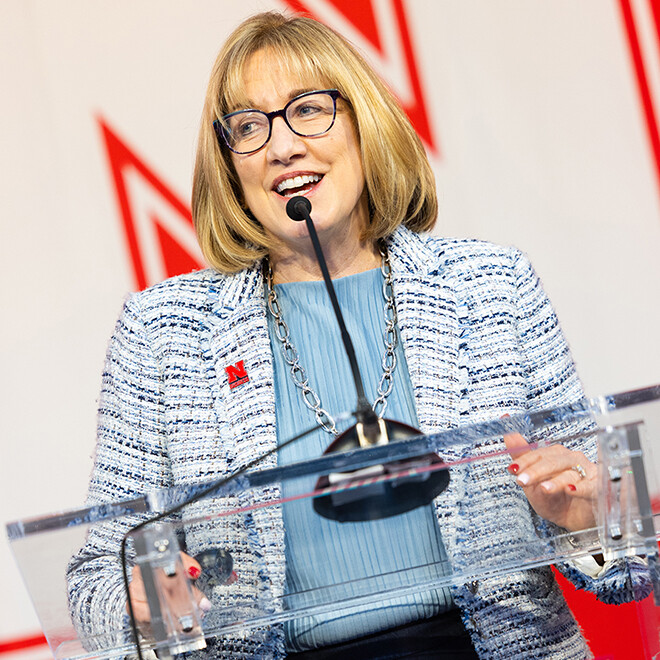
Kathy Farrell, J and S Stuart Endowed Dean of the College of Business, shared how cross-campus partnerships have opened new doors for students. She specifically mentioned the college’s new core curriculum and interdisciplinary programs for students, including Business and Law and the Center for Entrepreneurship.
The college celebrated its largest freshman class this year and its highest retention rates.
“We're hitting things on all cylinders right now, and our goal is to continue that trajectory,” she said.
Law
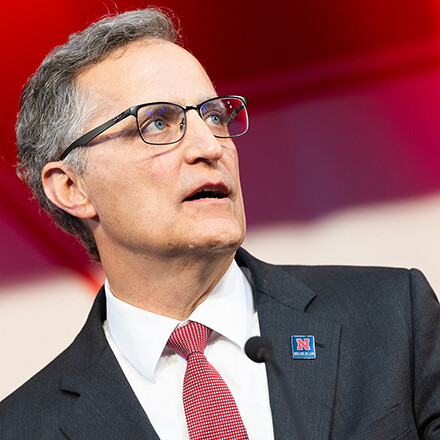
Richard Moberly, dean of the College of Law, homed in on two priorities for the college that advance its mission to develop inclusive leaders who advance justice and who solve problems and serve with integrity.
The first is helping alleviate legal deserts, especially in rural Nebraska. Moberly cited several programs and pipelines built to bring legal expertise to these deserts. One such program is the Rural Reconciliation Project, led by Jessica Shoemaker.
Secondly, Moberly said the college is positioning itself as leaders through the legal, constitutional and governmental recalibration that is currently occurring in the United States.
“'I’m really proud of our effort to think about the rule of law, and more importantly, to ask our students to think about it critically and what it means for the future of democracy,” he said.
Education and Human Sciences
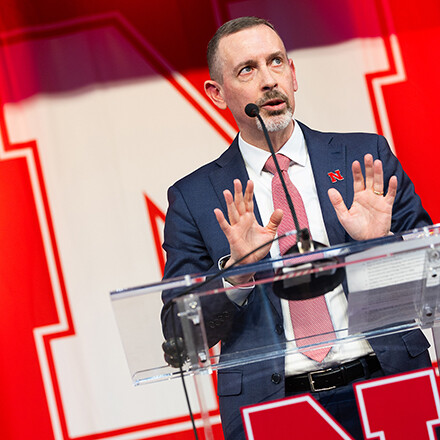
To look forward, Jeff Reese, dean of the College of Education and Human Sciences, first looked back at the founding of the college as the Department of Pedagogy in 1895.
“Though much has changed, the roots of our ‘why’ haven’t changed,” Reese said. “We're often referred to by others as the people's college, and our mission, our why, is that we're dedicated to enhancing the lives of individuals, families, schools and communities.”
Reese touted varied but remarkable, life-changing research, preparing the educators of tomorrow, and the college’s community engagement.
“One of the things I love about our college is that it's focused on addressing critical issues that we face in our state,” Reese said. “Our training and our research go beyond campus, and I believe that community engagement makes our college distinctive and highlights our why.”
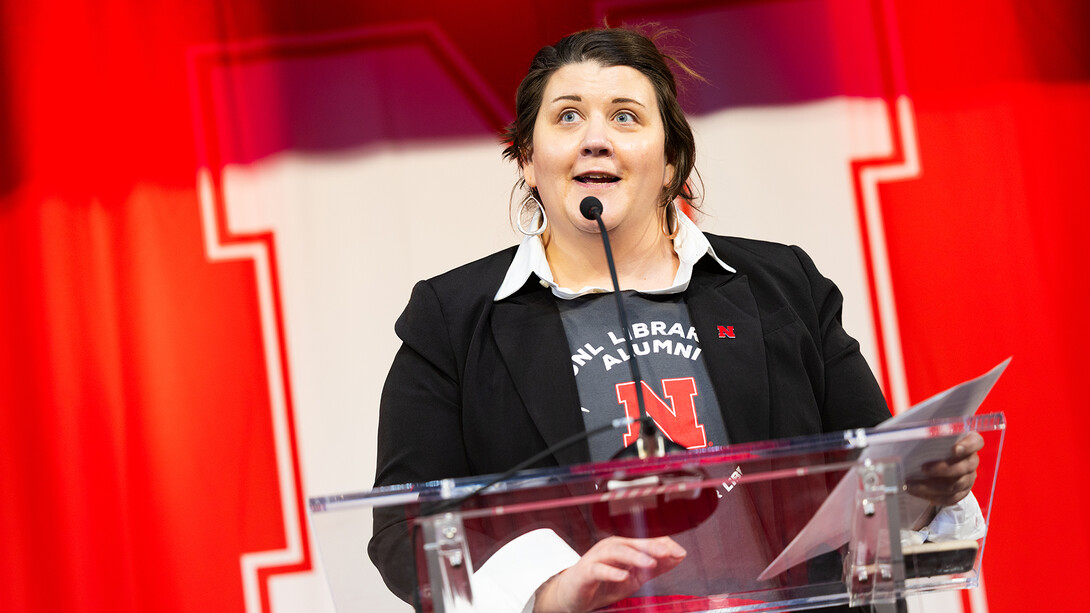
University Libraries
The Libraries are celebrating a series of anniversaries during the 2025-26 academic year, and Liz Lorang, dean of University Libraries, quoted a student essay that was written for the Pages to Paths celebration, examining the future of libraries.
“Helping researchers understand the limitations of AI, verify outputs and thoughtfully integrate these tools into their work should be a clear next step,” the student wrote. “As AI continues to reshape research, we need institutions that help us adopt the right tools before we are overwhelmed by unreliable ones.”
Lorang said the Libraries have always been a space for promise, holding knowledge and trust. She committed to helping ensure honest engagement with ideas and information of integrity.
“This era is one of extraordinary information abundance and also of deep uncertainty about what is true,” she said. “A world of sense making remains possible … This is the promise the UNL libraries keeps open for Nebraska and for every learner we serve.”
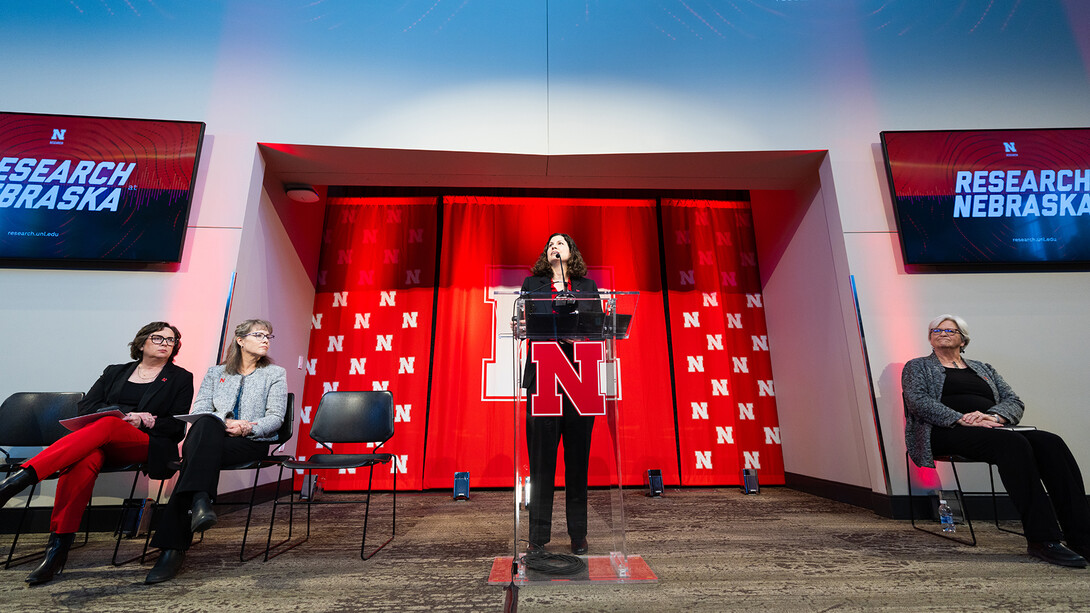
Research and Innovation
Jennifer Nelson, interim vice chancellor for research and innovation, highlighted the Office of Research and Innovation’s contributions to advancing science and the economy in Nebraska and beyond. The university crossed $400 million in research expenditures for the first time, with $412 million in the last fiscal year, showing 45% growth in the last decade. This also equated to $6.4 billion annually returned to Nebraska’s economy.
Nelson also praised the university’s faculty for their commitment to the university’s mission, noting hundreds of accolades received by faculty, including two years of a record number of CAREER awards from the National Science Foundation received by early career faculty.
“Research is possible because of the dedicated faculty who live out our university’s mission every day,” Nelson said. “Faculty scholarship improves lives, creates economic opportunities and shapes a more vibrant ... state of Nebraska and beyond.”
Student Success
Student success programs exist to help all students thrive and fulfill their dreams of earning a degree, said Amy Goodburn, senior associate vice chancellor and dean of undergraduate education. The office’s three main areas — advising and career readiness, teaching and learning, and student support — underpin the “principles of creating a campus that puts students at the center,” Goodburn said.
Goodburn pointed to proactive outreach in the form of people like academic navigators, collaborations with the University of Nebraska Medical Center and career fairs and coaching as ways the office helps students prepare for their futures and promote access to education for all learners.
Student Life
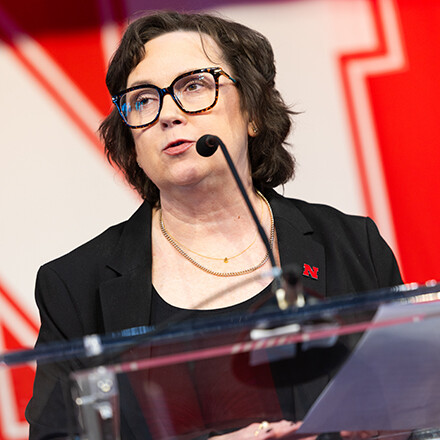
Students always remain at the center of “why” in the Division of Student Life, said Dee Dee Anderson, vice chancellor for student life. Anderson emphasized the importance of building community and fostering opportunities outside of academic settings in units like Housing and Dining and registered student organizations.
“We know that learning doesn’t stop at the classroom door,” Anderson said.
Anderson shared the impact of units with Student Life through data like 5,443 students living in residence halls, 1.8 million meals served in dining halls and $111,502 raised for Children’s Nebraska by student group Dance Marathon.
“Every day, our division shows up to ensure students don’t just attend the University of Nebraska–Lincoln, but they truly experience it,” Anderson said.
Association of Students of the University of Nebraska
In a video, Libby Wilkins, ASUN president and student regent, said the role is the latest step in personal growth, as her time on campus has given her opportunities to build skills in leadership, communication and community building. Wilkins, a senior agricultural leadership major, said she was grateful for the chance to “uplift 24,000 student voices this year.” She said collaboration, community and service are crucial for the university’s future.
“In this role, I’ve worked to foster community with individuals who hold perspectives different from my own, and I can say with confidence I am better because of those experiences,” Wilkins said.