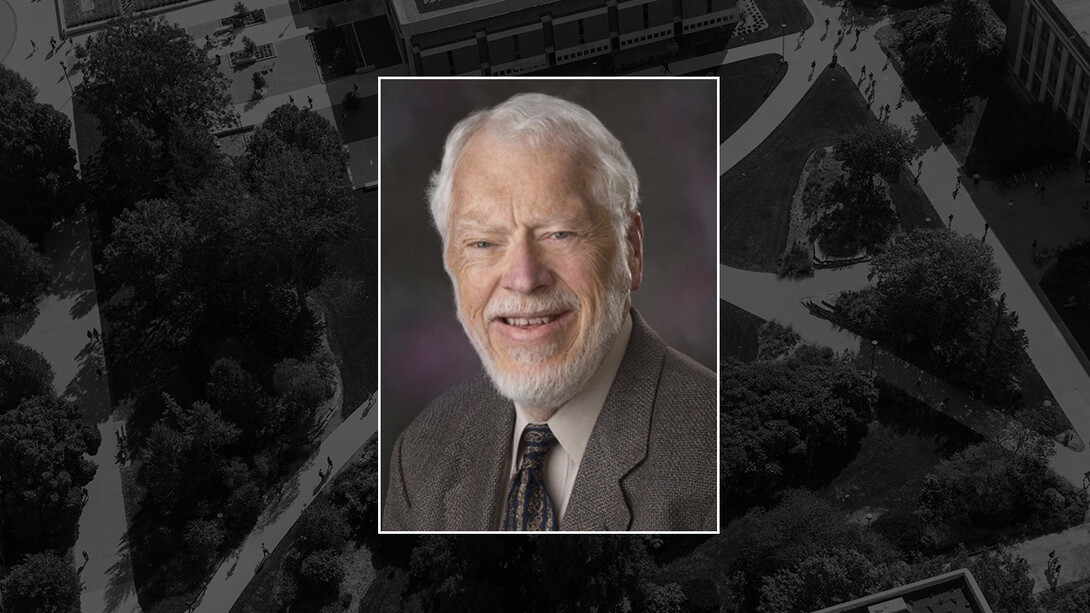
James “Jim” Eugene Specht, a longtime professor of agronomy and horticulture known for his foundational work and research, died Feb. 13.
Born in 1945 to Henry and Lydia, Specht grew up on a farm that produced irrigated sugar beets and other crops in western Nebraska. His passion for genetics was sparked during his undergraduate years at the University of Nebraska, particularly through a genetics course taught by professor David McGill. In 1965, he was awarded a Keim Scholarship and became a teaching assistant to learn that both instructor knowledge and student engagement were critical for successful teaching. He also worked as an undergraduate research assistant.
He received a bachelor's degree in agronomy and subsequently pursued a master's degree in maize genetics and breeding at the University of Illinois, which was interrupted by military service during the Vietnam War. After completing his service, Specht returned to Illinois to finish his second degree, and then a doctorate at UNL focusing on soybean genetics and physiology.
His early research experience at UNL laid the foundation for a 50-year career dedicated to enhancing soybean production through increased yields and water use efficiency, and greater profitability for soybean growers.
Specht’s unique breadth and depth of knowledge of plant genetics/genomics, plant physiology and agronomy, and the interactions amongst these factors, provided the foundation that supported his long-term research interests. The breakthroughs of his work made soybean one of the only major crop species to have a fully sequenced genome and map, which opened the door to further advances in soybean genomics and breeding.
Specht is widely recognized for his research on the genetic basis of soybean yield response to water — both scarcity and abundance. Specht also contributed to enhancing agronomic practices on the farm. He organized a research team to create a web site called SoyWater that provided a user-friendly, on-line venue to help soybean producers implement “just-in-time” irrigation that reduces the amount of water applied without any reduction in yield. The SoyWater website became quite popular after its release in 2010 with more than 1,100 registered users across Nebraska and other Corn Belt states.
He was a trusted adviser to the Nebraska Soybean Board for many decades and a tireless supporter of undergraduate and graduate education.
Many of his students now serve in leadership positions across academia, extension and industry. All of his students and colleagues remember Specht for his dedication to scientific rigor, insatiable appetite for knowledge, encyclopedic command of the scientific literature, and his ability to transmit that knowledge to soybean growers, students and scientific peers.
Specht married his wife, Pam in 1969. During their 57 years of marriage, they were travelers of the world, visiting over 50 countries. In early years of marriage they camped and hiked, visiting all national parks west of the Rockies.
He is proceeded in death by parents, Henry and Lydia, a brother Montgomery and sister Melanie. Jim is survived by his wife Pam, brother Terry Specht and his significant other Vivien and numerous nieces and nephews.
A noon gathering of friends and family will be held before a 1 p.m. service March 13 at Braman Mortuary—Millard Chapel, 6505 S. 144th in Omaha. An escorted procession to Omaha National Cemetery will take place after the service for a 2:30 p.m. ceremony with military honors.