In his early days of researching the 1937 occupation of Nanjing, China, by Japanese troops, Suping Lu stumbled across the name of an American diplomat who had sent to the U.S. government about the civilians killed by Japanese soldiers.
The diplomat, John Moore Allison, grew up in Lincoln and graduated from the University of Nebraska. It was only the first encounter Lu had with the university that he would eventually serve for more than three decades.
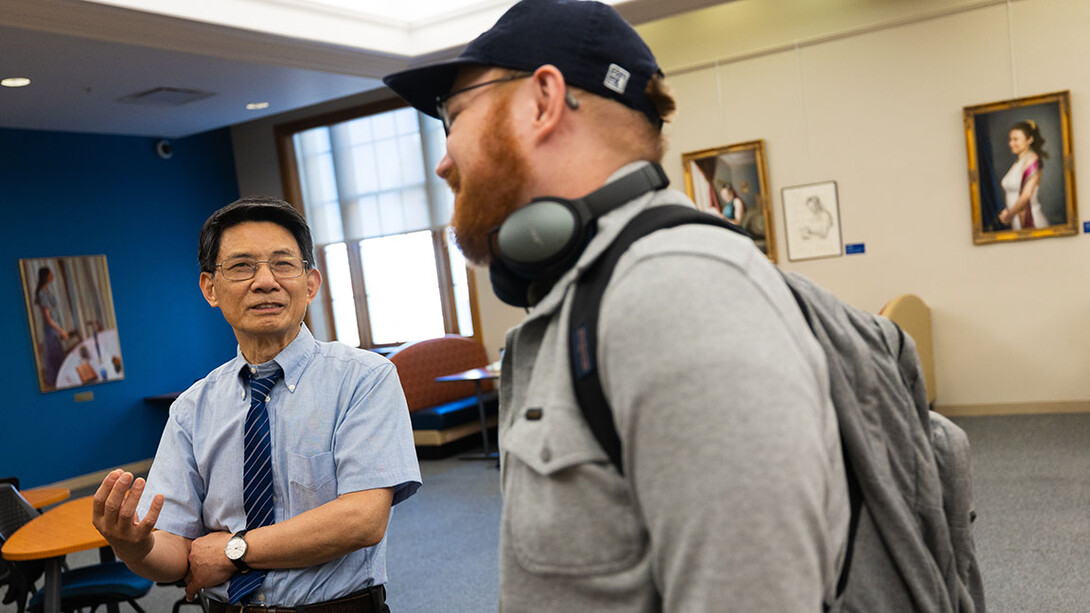
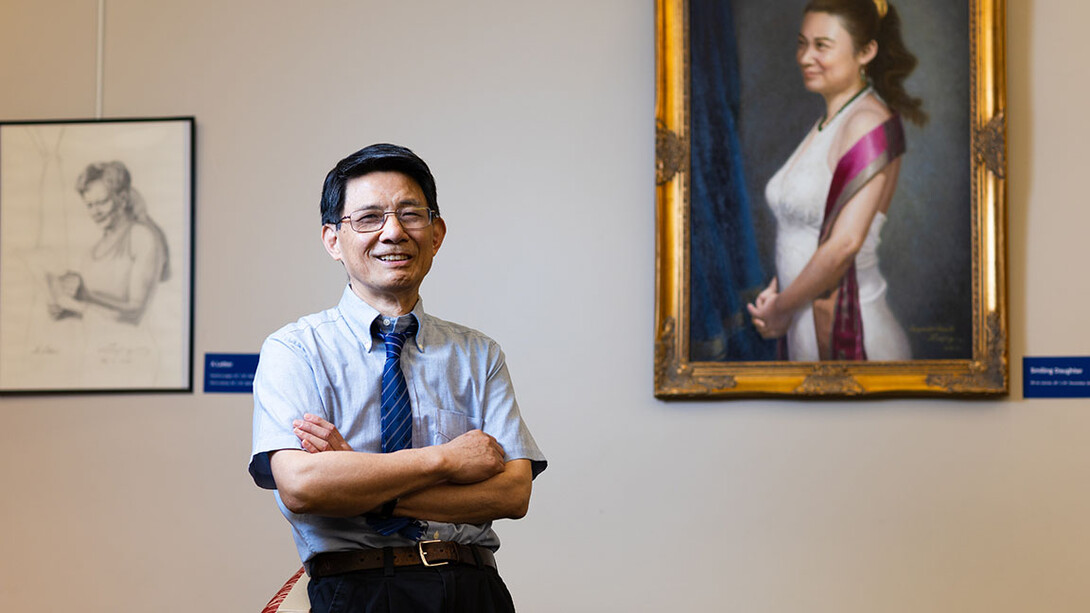
Lu, professor of social science collection development in University Libraries, became a noted scholar on this topic and is now preparing for retirement. Lu’s retirement reception is at 1:30 p.m. May 7 in room 221, Love Library South. As part of his farewell, Love Library will also host an exhibition of Lu’s artwork on the second floor of Love Library South, “Suping Lu — Portrait Painting/Drawing Exhibition,” open until May 31.
“I’m very grateful I got all the opportunities, time and resources to do the research,” Lu said. “And I’m also very fortunate whatever I wrote got published.”
Lu joined the faculty at Nebraska in 1994, following stints at Tufts University, Ohio University and the University of South Carolina. His first position was at Nanjing Teachers University in Nanjing, China, his alma mater and the site of a refugee camp for women during the time of Japanese occupation of the city.
Lu lived in Nanjing for 12 years and started researching the incident because of his connection to the city. Lu has published seven books in English, 10 books in Chinese, one in German and one in Japanese on the subject.
He studied English as a university student, but when he had applied, Lu had to choose between two paths. He selected entry exams for English over painting, in part because there were more spots available in that program. China was coming out of the Cultural Revolution, during which schools and universities were closed for a time.
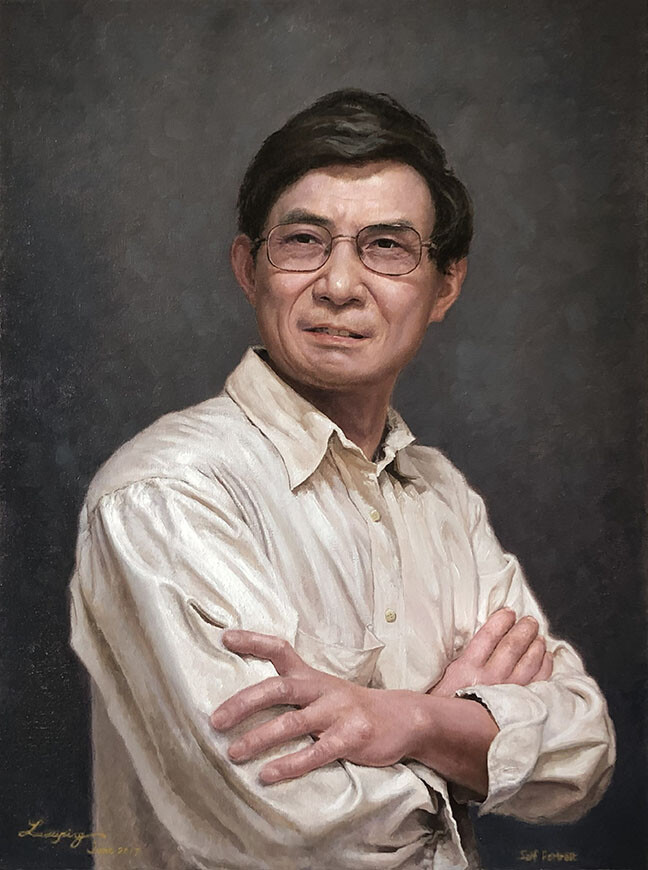
“We didn’t have books to study, but we had all the time, so I did a lot of drawing and painting,” Lu said. “I always liked oil painting, which is a Western art, so I thought maybe I should learn English…For the whole state, they would accept 400 English majors, but only 20 art majors, so you figure out which way you can be more successful, so I picked English.”
Lu has been painting and drawing as long as he can remember, he said. At four or five years old, he was asking for boxes of crayons from his father, a high school teacher.
“My father had to provide one box weekly,” Lu said.
Lu’s mother died when he was very young, so when Lu was a child, his father would often take Lu to school with him. One day, the art teacher noticed him and learned that Lu liked to paint. This teacher started giving him art lessons, becoming like a second father, and Lu never stopped pursuing art alongside his day job.
“If you like to do something, you always try to find a way to do it,” he said.
Many of Lu’s works are portraits, especially of loved ones. He painted a portrait of his daughter to celebrate her graduation from a doctoral program, for example. Some of Lu’s self-portraits, and even some of his other drawings, have been included as an author portrait in his books. At times he might set down the brush for a time while working on a book or other project, but he always comes back to it, he said.
“Research is analytical, philosophical, but painting is more romantic,” Lu said. “It allows a lot of imagination.”
One of Lu’s early books, which includes a map he drew of the campus in Nanjing, recounted the story of a leader of the university he eventually attended. In it he writes of Minnie Vautrin, a missionary from Illinois who taught at the university. In addition to the Americans like Allison and Vautrin, diplomats and missionaries from Great Britain and Germany also recorded their experiences from Nanjing, filling out a rich written history for Lu to draw from for research.
“Your responsibility is to observe, collect information, as much as possible, to report to your superiors,” Lu said.
Lu has traveled widely to pore over documents in several countries for projects. He was waiting in line to access some at the National Archives when an archivist there heard that Lu was visiting from Nebraska and helped him find everything he needed.
“I kept my correspondence with him, and he taught me a lot,” Lu said. “You just never know what kind of help you’ll get.”
Outside of his research, Lu teaches students about how to use the library, identify sources and other research strategies. Lu, predictably, imagines he will spend a lot of time drawing and painting in his retirement, along with occasionally contributing articles or other writing about Nanjing if asked.
“When you can produce, you have a reward,” Lu said. “You have a sense of achievement.”