Digital research in the humanities has opened new ways to examine the layers and complexities of Holocaust history, and University of Nebraska–Lincoln scholars will convene leading researchers for the 11th annual Nebraska Forum on Digital Humanities to explore how digital tools can further shape storytelling and historical analysis.
The forum, “Visualizing Holocaust Memory Through the Digital Humanities: Testimony, Interdisciplinary Collaboration and Ethical Challenges,” is April 16-17 at the University of Nebraska–Lincoln. Sessions will be in the Jackie Gaughan Multicultural Center’s Ubuntu Room, Room 202, and Andrews Hall’s Bailey Library, Room 228. The forum is co-hosted by the Center for Digital Research in the Humanities and the Harris Center for Judaic Studies.
The forum is free and open to the public. No registration is required.
"Professor Ari Kohen, inaugural Kripke Chair of Judaic Studies and director of the Norman and Bernice Harris Center for Judaic Studies, and I are honored to have the opportunity to co-host the forum this year with the Center for Digital Research in the Humanities," said Beth Dotan, research assistant professor in the Harris Center. "Bringing together key scholars who integrate digital humanities tools with Holocaust content is essential to Holocaust memory now and into the future."
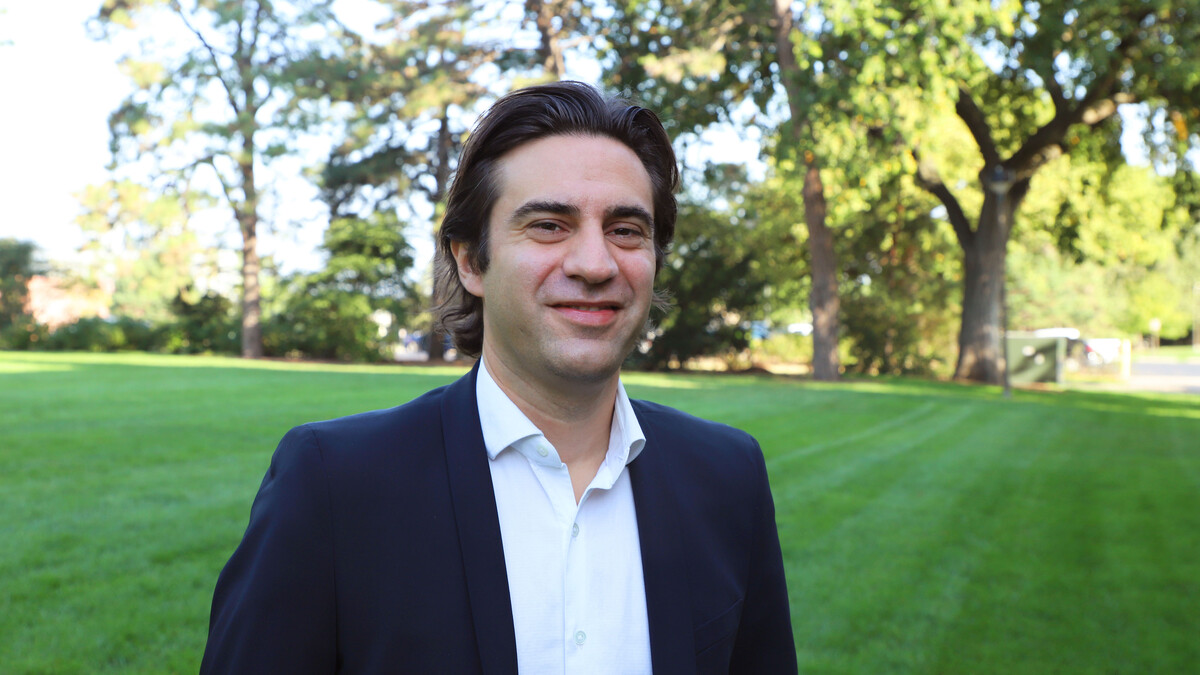
As part of the forum, Nils Roemer of the University of Texas at Dallas will deliver the Harris Center’s Henry and Gretl Wald Lecture on the Holocaust, “Mapping Catastrophe: From Maps to Digital Interfaces,” at 7 p.m. April 16 in the Gaughan Multicultural Center’s Unity Room, Room 212. Roemer serves as dean of the Harry W. Bass Jr. School of Arts, Humanities and Technology and director of the Ackerman Center for Holocaust Studies. His research focus is on the Holocaust, modern history, and German and Jewish cultural and intellectual studies.
Additionally, panel discussions, workshops and roundtables will address the novel integrations that have revealed complex layers of Holocaust history and seek to deliberate over the following questions:
- How has the interpretation of Holocaust content shifted in the digital age?
- How might big data provide visualization that was not previously attainable?
- In what ways are ethical boundaries blurred or sharpened as researchers and developers leverage their disciplines within Holocaust-related scholarship via digital expressions?
The Center for Digital Research in the Humanities has hosted the forum since 2006, highlighting the diverse intellectual activity of the digital humanities field. Supporters of the 2026 forum include the Office of Research and Innovation; the Departments of Political Science, History, and Teaching, Learning and Teacher Education; and the Forsythe Family Program on Human Rights and Humanitarian Affairs.
More information on the forum, including a complete schedule of speakers and panel discussions, can be found online.