A decade ago, the University of Nebraska Press published a list of its 75 most significant books for its 75th anniversary. At number one, above books by Mari Sandoz, Ted Kooser, even Willa Cather — “Roundup: A Nebraska Reader,” compiled and edited by Virginia Faulkner in 1957.
Notably, the list is in chronological order by publication date.
While Faulkner’s name isn’t widely known today, her work as the press's associate editor and, starting in 1959, editor-in-chief, left a mark on both the press and the University of Nebraska–Lincoln. That story is told in a new book by Montana-based author Brad Bigelow, “Virginia Faulkner: A Life in Two Acts,” released in January from Bison Books.
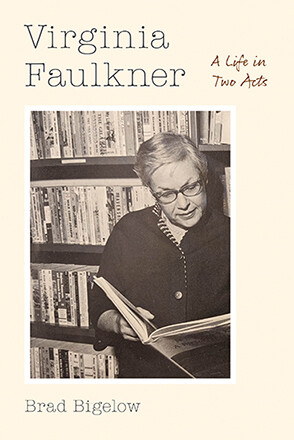
It was an obvious “yes” to publish the book, said Bridget Barry, UNP editor-in-chief. Bison Books is a University of Nebraska Press imprint that Faulkner herself had a hand in building in 1960.
“The manuscript was great and Brad’s a fabulous writer,” Barry said. “It’s a really compelling story about somebody that most people have no idea who she is or have never heard of her before.”
Faulkner’s relative anonymity is one of the reasons Bigelow became interested in her story. He has written about hundreds out-of-print books on his blog, The Neglected Books Page, and picked up Faulkner’s 1940 novel, “My Hey-Day,” to review in 2008.
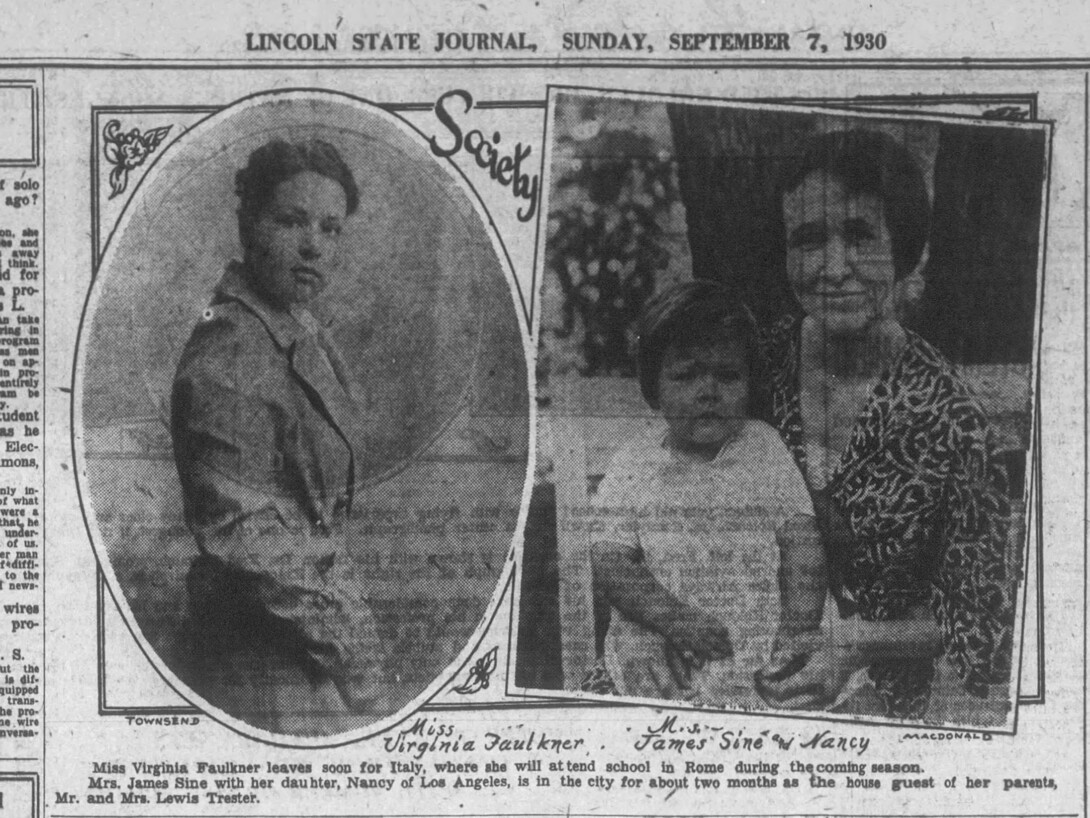
The book was “pure froth,” he wrote. What stuck with him was that Faulkner, born in Lincoln in 1913, began her career as a novelist, freelance writer, New York playwright and Hollywood screenwriter. But in 1956, she returned to her hometown to take a position as assistant editor at the University of Nebraska Press. Bigelow thought that was an odd trajectory but didn’t think much more about it, he said.
He returned to researching her in 2020 for his master’s degree in biography and creative nonfiction at the University of East Anglia, in the United Kingdom.
“I lucked out very early on, making contacts and emailing people,” he said.
Those contacts led him to Ron Hull, a long-time leader in Nebraska public media. Hull was enthusiastic to share stories of Faulkner, who he’d known as a friend and a colleague at the university, and told Donna Shear, University of Nebraska Press director at the time, that Bigelow was working on a book.
Which was news to Bigelow at the time. He hadn’t initially intended to write more than his thesis.
There was more than enough of Faulkner’s story to fill 250-plus pages, though. Bigelow traveled to Nebraska to spend days in Love Library looking through the press’s files from Faulkner’s 24 years on staff and interviewed people who knew, worked with or had encountered Faulkner’s name in their research. His findings added context to what the press's team had known for years: that Faulkner was a key reason Willa Cather remains a celebrated author, not just in Nebraska, but over time and across the world.
“By the time Faulkner was an editor, Cather had sort of fallen out of popular memory,” Barry said. “So the work that she did to revive Cather and her writing was critical.”
That revival is intertwined with the creation of Bison Books with Bruce Nicoll, then press director. The imprint’s publications included cost-effective paperbacks of out-of-print or public domain books, available to both academic audiences and general readers via grocery stores, gas stations and gift shops.
Faulkner saw this as an opportunity, Bigelow said, to “build up this body of work around Cather,” particularly after meeting her partner, Bernice Slote, a Cather scholar and UNL English professor. By Faulkner’s death in September 1980, the press had published almost 10 books about or by Cather. In the years since, that library has grown to more than 60 publications.
Her legacy didn’t stop at the endpages, either – a monetary gift left by Faulkner to the press provides funds to publish two books annually, Barry said. The body of research started by Faulkner and Slote continues to impact scholars at UNL and beyond.
“Great Cather scholars are sitting right next to me as I’m talking about Cather,” Barry said, gesturing to Melissa Homestead, UNL professor of English and advisory editor of the Willa Cather Archive, and Emily Rau, editor of the Willa Cather Archive, at an event celebrating Bigelow’s book.
Decades after her death, Faulkner’s influence remains embedded in the work of the press — in its Cather catalog, the Bison Books imprint and even in the anniversary list that quietly placed her work at the top.
Now, as the University of Nebraska Press marks its 85th year, the house Faulkner helped shape is telling her story from the very imprint she helped build.
“This is the perfect moment to publish it,” Barry said.