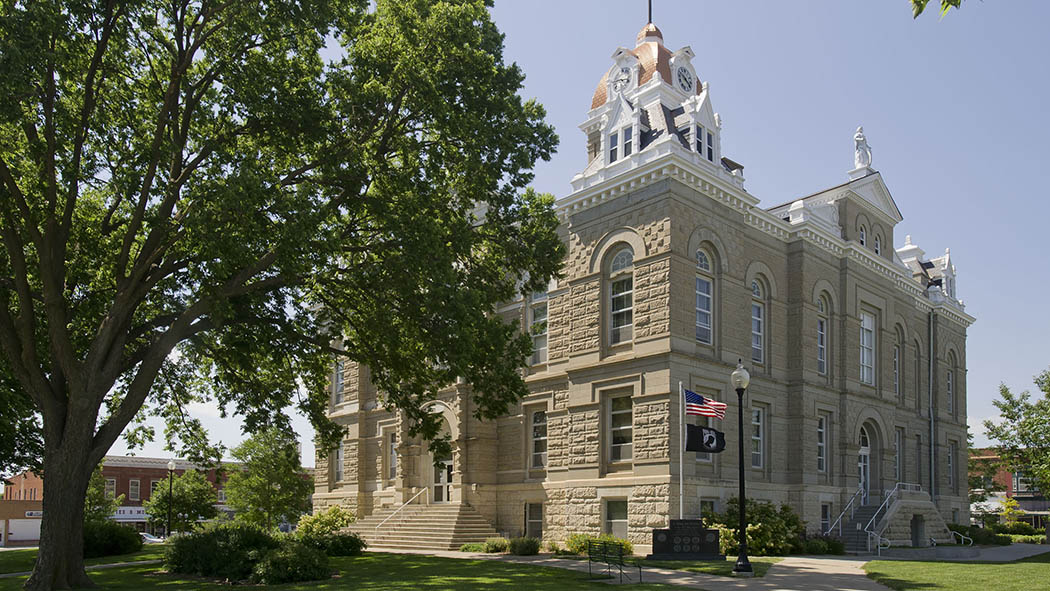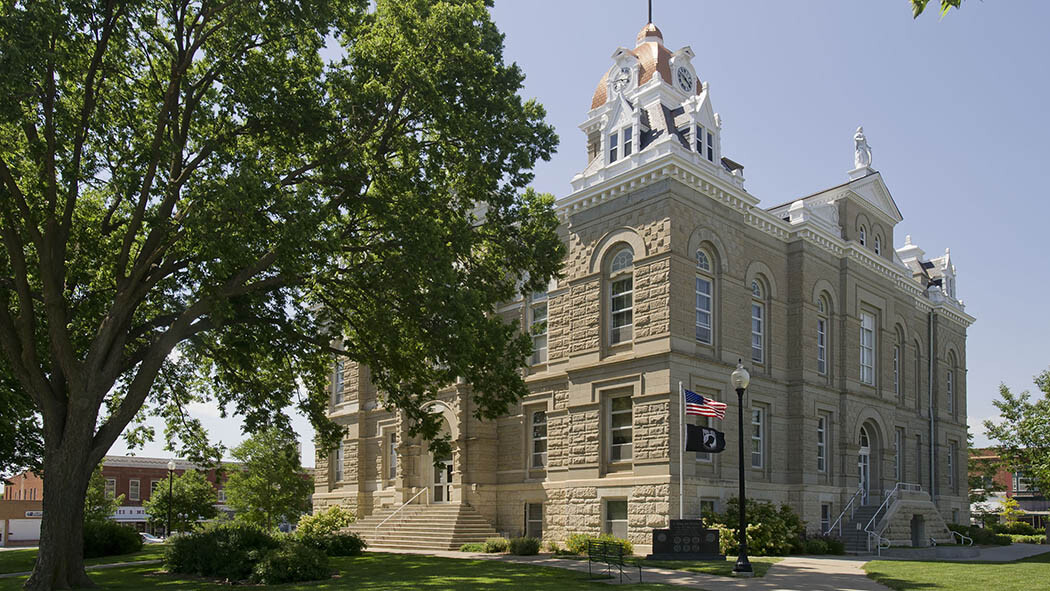
In spring 2025, students from an agricultural economics class at the University of Nebraska–Lincoln met with residents from Fairbury, Nebraska, to discuss the community’s plans for growth and development, and how the students could help. A year later, the impact of those discussions is still being felt and, in some cases, the discussed goals are coming to fruition.
The course, Agricultural Economics 376, focuses on rural community development. Taught by Daniela Mattos, assistant professor of practice in agricultural economics, the students collaborate on a team project, interacting with rural residents to identify challenges in their community and then analyze and propose recommendations to address those challenges.
“We try as much as possible to make it very holistic,” Mattos said. “We look at every aspect of the community, not just the economics, because everything in a community is connected ... If we do anything for the economy, it’s going to affect all the other parts of the community.”
Mattos chose Fairbury for practical reasons — it was reasonably close to the university, making day trips feasible for students, and it had a slightly larger-than-average population for Nebraska cities of nearly 4,000.
After spending weeks in the classroom learning about Fairbury, the students visited and met with local leaders, business owners and residents. The conversation centered on the challenges the community faced, including workforce housing shortages, insufficient child care options, infrastructure and amenities, and broadband internet.
The students then returned to the classroom, where they, under Mattos’ guidance, analyzed Fairbury's assets in relation to the challenges and collaborated on an action plan they could propose to the community.
One of the greatest insights the students gained, Mattos said, was how interconnected many of the issues were.
“They were like, ‘If we recruit people, where are they going to live?’” she said. “It was a real ‘wow’ moment.”
Toward the end of the semester, the students returned to Fairbury and presented their 80-page report, which covered everything from community comparisons to practical recommendations, highlighting housing strategies, child care solutions, business and tourism ideas, and which local and federal resources were available and how to find them.
Emma Moss, then a sophomore, said they offered some “observations, recommendations and then steps that can help (them) achieve those recommendations. We gave them a few solid options … and some loose ends to build their own pathway.”
That community independence was key for Moss, who said the report included recommendations for actions and directions for resources, but in the end the community had to make changes in their own way. The report was tailored to that end, allowing the freedom to choose the path stakeholders thought would best address a given issue.
Mark Schoenrock, Jefferson County commissioner and a Fairbury resident, said the students brought new insight to challenges that made tackling them seem more feasible.
“The thing that I appreciated the most was to have an external set of eyes look at things,” Schoenrock said. “We have the same people all the time, and you can get tunnel vision, and I was grateful to have that outside look. I think it brings really good value to the community.”
For Laura Bedlan, Fairbury’s development services director, the greatest impact was two-fold: Many of the recommendations were in line with ideas the steering community had already batted around, reaffirming they were on the right track in their development efforts. And the students’ involvement sparked meaningful conversations among community stakeholders about their efforts.
“They don’t often get in a room together to specifically talk about development of the city,” Bedlan said. “But when they sit down together and really have a productive discussion (with the students), I think they saw it in a new light. So that’s a big value add.”
A takeaway for Moss was not only which kinds of conversations are needed to make a community thrive, but the self-confidence she built that she will rely on when it’s her turn in the stakeholder seat.
“We were trusted with such an important project that showed that people do have faith in the upcoming generation,” Moss said.
While the students’ visit ended a year ago, Fairbury’s momentum hasn’t declined. When asked about progress over the past year, Bedlan pointed to the community’s collaborative efforts and said: “The short answer is, yes. The long answer is trail projects, industrial park improvements, some housing. Development just takes time, but we are moving forward on that path.”
Mattos is teaching the course again this spring, working with Milford, Nebraska. No matter the community or the people involved, for her the success comes in what the students learn and what the communities take away.
“If we get these communities to sit down and talk about the issues, get involved and engaged, it’s already a win,” she said.
Share
News Release Contact(s)
Related Links
High Resolution Photos