Despite challenges, Huskers showed much resilience in 2025 and found success and reasons to celebrate.
Here, we look back at the successes of students and colleagues who strengthened the University of Nebraska–Lincoln’s mission in 2025.
Academic excellence
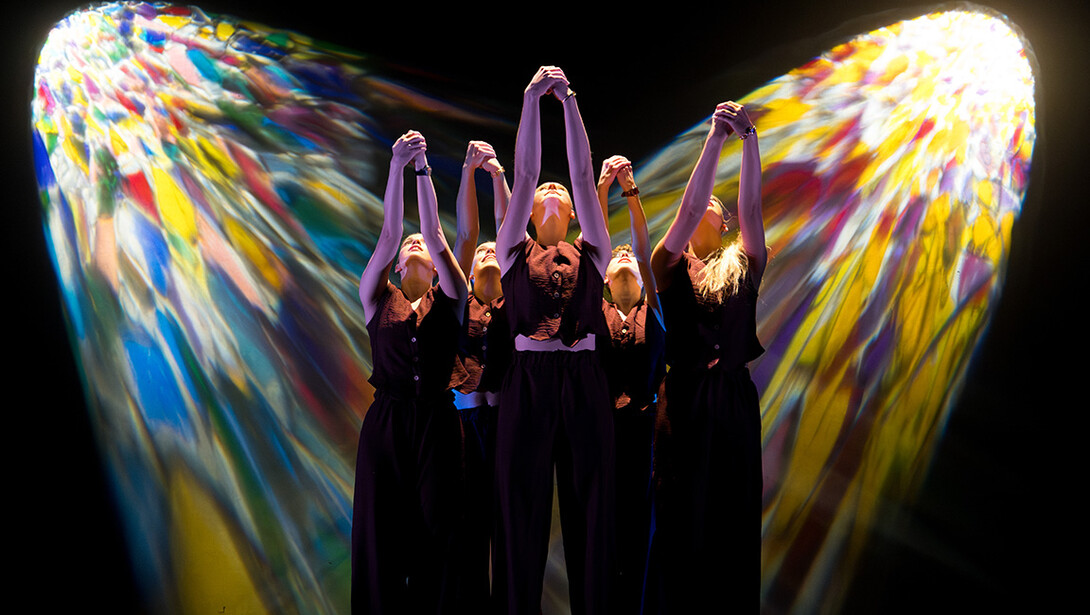
The year began with news that the University of Nebraska–Lincoln combined choir was invited to perform in Washington, D.C. More than 120 students performed during the 60th Presidential Inauguration on Jan. 20. The students opened the ceremony alongside the U.S. Marine Band, singing "One Voice."
The spring semester was rolling when the speech and debate team notched two second-place national finishes, at the American Forensic Association national speech tournament and the Lincoln Douglas Debate contest.
Also in the spring, Luke McDermott, a senior political science, economics and history major, earned the Harry S. Truman Scholarship in April. One of 54 scholars nationwide who won the award, McDermott said he plans to use the scholarship for law school.
Three Husker students achieved the rare feat of publishing as first authors of two scientific research articles describing significant findings about how human immune systems evolved. Under the mentorship of Luwen Zhang, Vanessa Hubing, Avery Marquis and Chanasei Ziemann earned media attention for their work.
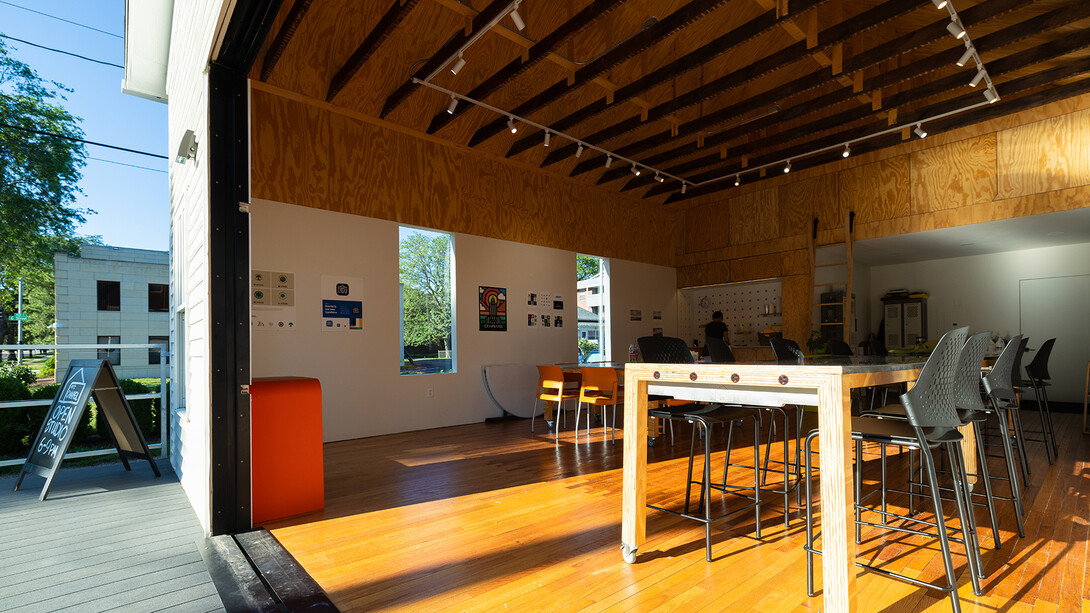
The summer saw the celebration of the opening of the Art Chapel in Lincoln. Students from the College of Architecture designed and constructed the new Lincoln community space that opened in July. A 150-year-old chapel at the F Street Neighborhood Church was renovated for the space. Architecture students also celebrated the groundbreaking of the Benson House and the Corby House in Omaha in June. The smaller homes were developed by the college’s FACT (Fabrication and Construction Team) studio, as an initiative to address affordable housing.
In pursuit of improving student outcomes, university faculty and staff were successful in raising the retention and graduation rates to historical highs and conferred 5,436 degrees in 2025.
The university also earned accolades for its first-generation student programs and its online master’s programs. Nebraska was among 18 institutions recognized as a Network Champion by FirstGen Forward for its leadership in advancing first-generation student success and for serving as a national model for other universities. The College of Engineering landed in the top five of the U.S. News and World Report’s rankings for online master’s programs, and the College of Business’s MBA program landed at No. 29.
And, the agriculture and natural resources programs at Nebraska were ranked in the top 10% of nearly 500 institutions worldwide, according to new QS World University Rankings.
Reasons to celebrate
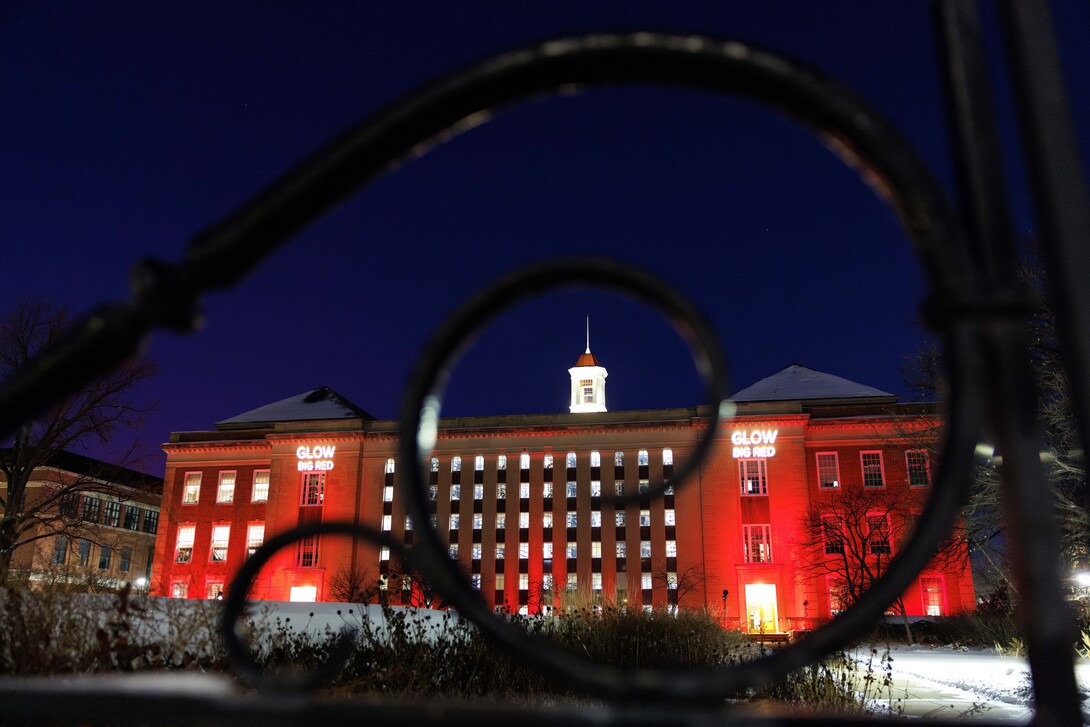
In February, the annual day of giving, Glow Big Red, set fundraising records, raising $1 million for the first time ever.
The university rolled out the red carpet for about 2,000 of the country’s sharpest minds for the 41st annual Science Olympiad Nationals in May, showcasing all that Nebraska has to offer.
Nebraska feted its most famous alumnus, Johnny Carson, for his 100th birthday in October. The late comedian and television host began his philanthropic support of the university in 1969. Gifts from Carson, his estate and the Johnny Carson Foundation have exceeded $50 million.
And 2025 marked a series of milestones for University Libraries. Love Library turned 80, Love North turned 50 and the Center for Digital Research in the Humanities celebrated its 20-year anniversary. There will be more milestones in 2026, and the Libraries’ Pages to Paths celebration is ongoing.
The university also heralded its economic importance to the state of Nebraska, providing an economic impact of $3.1 billion. An October report showed that IANR delivers $849 million in economic impact, supporting agriculture, the state’s top industry.
Research and innovation for better lives
From furthering the understanding of global drought effects to taking big steps in the development of a universal flu vaccine, Nebraska research impacted lives around the globe, innovating solutions for better health, food, water and child safety.

Janos Zempleni and Jiantao Guo incorporated Minovacca to commercialize the use of universal milk exosomes — natural nanoparticles contained in milk — to transport cargo to human cells. In another health care commercialization breakthrough, Steven Barlow earned a patent for his pTACS Somatosensory Biomedical Device, a revolutionary low-cost and noninvasive treatment for stroke. The patent is a step in the process of getting FDA approval and establishing a biomedical startup to manufacture and commercialize the device.
In the hunt for a better vaccine, Eric Weaver and his team moved another step closer by publishing a new article describing the development of the Epigraph vaccine, which, according to lab analyses, could provide immunity to Influenza A for at least a decade.
To better understand the state of local news outlets and what those communities look like, Jessica Walsh, assistant professor of journalism, produced the first-ever Nebraska local news interactive map and ecosystem report.
An international panel chaired by Craig Allen compiled and wrote a report for the International Union of Forest Research Organization, pointing to the crucial benefits forests provide and calling on countries to adopt well-informed resilience strategies. The National Drought Mitigation Center also led an international team, collaborating with the United Nations’ Convention to Combat Desertification to prepare a report outlining the impacts of drought around the world since 2023. The report was released July 2 at the fourth International Conference on Financing for Development in Seville, Spain.
James Schnable, Vladimir Torres-Rodriguez and Guangchao Sun helped an international team identify a hidden layer of genetic control within the DNA of corn. The findings reveal how small variations in DNA can influence important traits such as drought resistance, plant height and flower time, ultimately leading to more resilient crops.
The College of Law launched the Nebraska Children’s Justice and Legal Advocacy Center, a new initiative focused on addressing the shortage of qualified attorneys in rural communities across the state.
S. Kathleen Lyons led a team to develop a new framework — Earth system engineering — for examining how organisms, including humans, have fundamentally altered ecosystems on a global scale across hundreds, thousands or millions of years. Speaking of ancient ecosystems, a team including Ashley Poust made headlines when they published findings from a hyoid bone intact with the Nanotyrannus holotype skull that confirmed the existence of the debated dinosaur species.
Faculty honors
After an institutional record for CAREER awards was set in 2024, the university matched the number again in 2025. Nine faculty earned National Science Foundation Faculty Early Career Development Program awards during the 2025 grant cycle, tying the university record set in 2024. Rising scholars Sunil Sukumaran, Daniel Tannenbaum, Tirthankar Roy, Jenna Finch, Shubhendu Bhardwaj, Lucia Fernandez-Ballestar, Robert Streubel, Susan VanderPlas and Dung Hoang Tran were awarded a combined total of $6.9 million to pursue research.
Other accolades included:
- Dean Sicking, professor emeritus of civil and environmental engineering and former director of the Midwest Roadside Safety Facility, received the Landmark Award for outstanding contributions to stock car racing during the NASCAR Hall of Fame ceremony Feb. 7. Sicking and colleagues at the facility invented the Steel and Foam Energy Reduction (SAFER) barrier system, which has saved countless drivers’ lives over the past 20-plus years.
- Husker physicists Ken Bloom, Daniel Claes and Ilya Kravchenko are members of a team that received the 2025 Breakthrough Prize in Fundamental Physics. The prize was awarded to the international team for detailed measurements of the Higgs boson, a tiny particle that helps explain why items in the universe have mass.
- Dean Lance C. Pérez has been named a fellow of the American Association for the Advancement of Science, the world’s largest multidisciplinary scientific society.
- Eric Markvicka, was elected a senior member of the National Academy of Inventors.
- Sherilyn Fritz, George Holmes Professor in Earth and atmospheric sciences and the School of Biological Sciences, joined 120 new members and 30 international members elected for membership in the National Academy of Sciences.
- Irina Filina has been selected as a Fulbright U.S. Scholar and will travel to Iceland in summer 2026 to collect data for her ongoing research into the proposed continent of Icelandia.
Campus transforms
If there was a sign of both progress and pain in Lincoln in 2025, it was the ubiquitous orange construction cone, and that was true at the university, too.
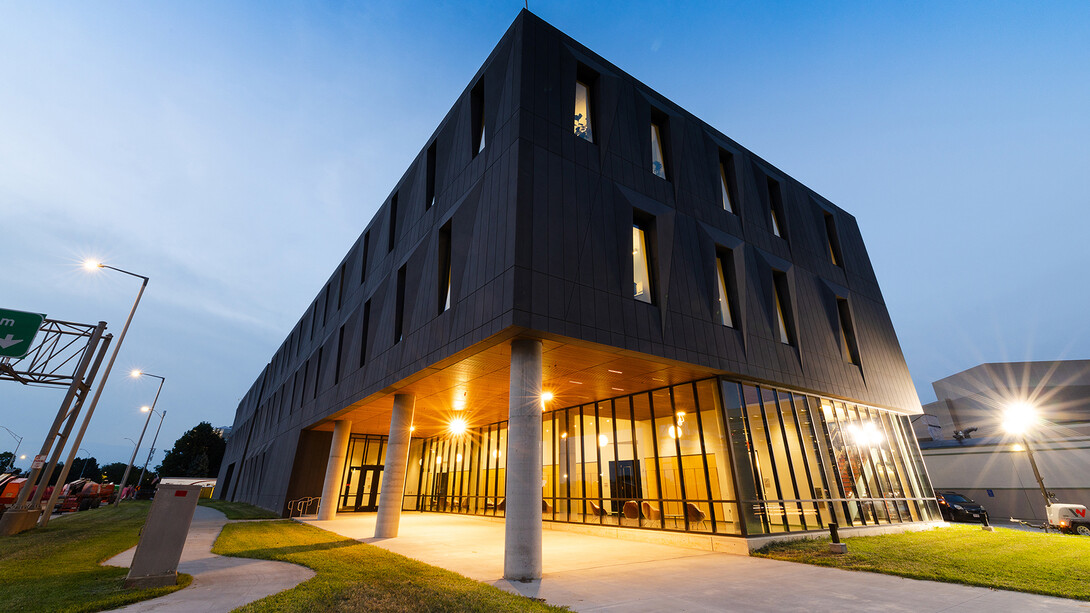
Cones, caution tape and construction fencing dotted both City and East campuses in service to renovations both big and small, and the construction of the new Westbrook Music Building, which welcomed students into its new spaces when the fall semester began. The 103,000-square-feet, state-of-the-art facility offers more space, more natural lighting and the latest technology. Construction on the project will continue with phase two, which will renovate a southwest portion of the original music building.
Fall classes were also the first to be held in the new hospitality, restaurant and tourism management learning spaces inside The Scarlet Hotel, on Nebraska Innovation Campus.
The Legacy Meadows Project improved green spaces on East Campus, adding lighting, seating and performance areas, and increasing ADA accessibility.
The Nebraska Union continues its transformation. Grabbing a bite or a cup of coffee has never been easier on campus, thanks to the opening of a new Herbie’s Market in March. With Amazon’s Just Walk Out technology, the market is open 24 hours a day, seven days a week. With that finished, renovations began on the food court in July, with an expected completion date of fall 2026. The renovations will bring in new options for students and visitors.
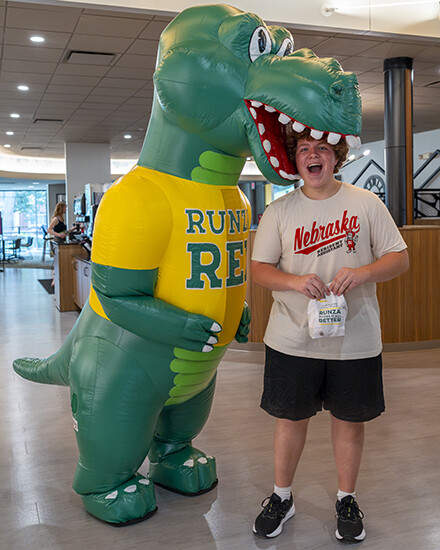
Meanwhile, at Selleck Food Court, a Nebraska staple opened — Runza is back.
Another Nebraska icon, Mueller Tower is undergoing a major face-lift. After years of concerns of falling rock from its façade, contractors removed the limestone and will put it back piece by piece, replacing any limestone that is damaged.
And campus said goodbye to Love Memorial Hall, the longest-serving residence hall at the university, in May. Events were held in April and May for alumni to celebrate the lasting relationships formed in the residence hall over the decades.
In Memoriam
The university community said goodbye to titans of support, outstanding emeriti faculty and others:
Roger W. Mandigo, 85, emeritus professor of animal science, died Jan. 24 at Eastmont Living in Lincoln. Mandigo received greatest public recognition for developing a process that allows pork and other meats to be formed into different shapes. It led to McDonald’s creating the McRib sandwich (for which Mandigo was often mistakenly given credit) and the development of other shaped meat products.
Brian A. Larkins, 78, a University of Nebraska alumnus, retired faculty and internationally recognized plant molecular biologist, died Jan. 19 at his home in Tucson, Arizona.
B. Keith Heuermann, a leader in Nebraska agriculture and a major supporter of the university, died March 29 at age 99.
Kevin Michael Lee, 62, of Lincoln, Nebraska, died April 14. For more than 20 years, he worked as a research associate professor at Nebraska in the Department of Physics and Astronomy, as well as for the Center for Science, Mathematics and Computer Education.
Glenna Berry-Horton, known professionally as Glenna Luschei, died April 16 in Newport Beach, California, at age 91. An alumna of the university, she became a philanthropic supporter, endowing in perpetuity the Glenna Luschei Editorship of the Prairie Schooner literary journal and the Glenna Luschei African Poetry Prize.
Campus also said goodbye to professors, staff and supporters of various campus endeavors.